
Categories
Uncategorized

Smart Contract Interaction Is the New DeFi Risk Boundary

You are moving funds on a decentralized exchange before work, comparing a quoted price with the amount you expect to receive. The interface looks familiar: connect a wallet, approve a token, confirm a swap. Yet the decisive event is not the button click. It is the set of instructions sent to a smart contract, the permissions attached to those instructions, and the state of several blockchains at the moment the transaction is executed. A transaction can therefore be valid, signed, and mined while still producing an outcome the user did not intend.

This is the central shift in DeFi. Wallets were once treated mainly as key storage and transaction broadcasters. Increasingly, they are becoming interpretation and risk-analysis layers between people and programmable financial systems. That change matters for US users navigating multiple EVM networks, unfamiliar dApps, token approvals, bridges, lending markets, and rapidly changing contract deployments.
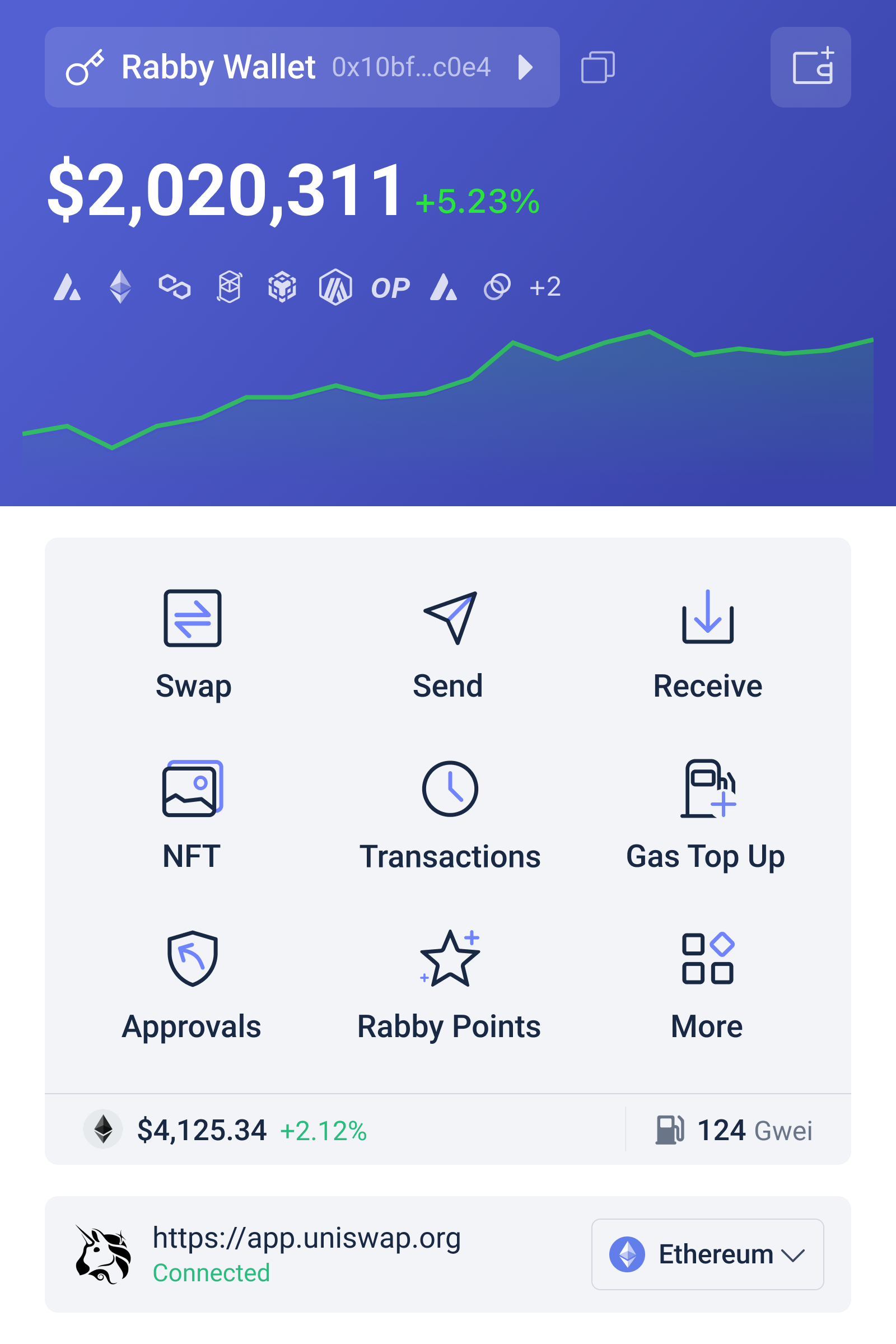
Wallet interface illustrating how users review smart contract actions before interacting with DeFi protocols

From sending transactions to interpreting intent

Early Ethereum usage encouraged a simple mental model: an address sends an asset to another address. DeFi made that model inadequate. A single transaction may call a router, which calls a liquidity pool, which transfers tokens, updates accounting records, and invokes another contract. The user sees “swap,” but the blockchain processes a sequence of machine-readable operations.

A smart contract is code deployed on a blockchain. A DeFi protocol is usually a collection of such contracts that coordinate rules for trading, lending, borrowing, staking, or derivatives. A dApp, or decentralized application, is the user-facing software that helps people form and sign those interactions. These layers are related but not identical. The dApp may be compromised or poorly designed even when the underlying protocol is sound; a protocol may be audited yet still expose a risky function; and a wallet may accurately display a transaction without being able to guarantee the contract’s economic behavior.

The useful question is therefore not simply, “Is this dApp legitimate?” It is: “What will this exact transaction cause, under the current chain state, and what authority will I give the contract afterward?” That question separates identity-level trust from transaction-level analysis.

Why transaction simulation changes the decision

Transaction simulation attempts to execute a proposed transaction against a representation of current blockchain state before the user signs it. Depending on the implementation and network conditions, the resulting preview may reveal expected token transfers, approvals, balance changes, contract failures, or suspicious recipients. This is valuable because raw calldata—the encoded instructions sent to a contract—is not written for ordinary reading.

Simulation creates a practical bridge between code execution and human judgment. Instead of relying only on a dApp’s labels, the user can inspect consequences: which asset leaves the wallet, which asset arrives, whether an approval grants a narrow amount or effectively unlimited spending authority, and whether the transaction touches an unexpected contract.

There is an important limitation. A simulation is a conditional forecast, not a guarantee. The blockchain state can change between simulation and inclusion. A liquidity pool may move, a quote may expire, a contract may depend on block timestamp or transaction ordering, or a malicious contract may behave differently under certain conditions. Network-specific support can also vary. Simulation is best understood as a strong warning and comprehension tool, not an oracle of future truth.

This distinction is easy to miss. A green simulation does not mean an investment is safe, a token is valuable, or a protocol is solvent. It means that under the tested assumptions, the transaction produced an expected execution result. Economic risk remains separate from execution risk.

Approvals reveal the hidden persistence of DeFi access

One of the most consequential concepts in smart contract interaction is the token allowance. When a user approves a contract to spend an ERC-20 token, the permission can remain active after the immediate swap or deposit is complete. If the allowance is broader than necessary and the approved contract later becomes vulnerable or malicious, the permission may create a path to future loss.

This is why “I only signed one transaction” can be misleading. The first transaction may establish a durable capability rather than transfer funds immediately. A wallet that distinguishes an approval from a direct transfer helps users reason about persistence: what authority was granted, to whom, for which token, and for how much?

Limited approvals reduce exposure but can introduce friction and additional transactions. Unlimited approvals are convenient and may reduce repeated signing, yet they enlarge the consequences of a compromised spender. Neither choice is universally correct. A user interacting frequently with a well-understood protocol may accept a different operational trade-off from someone testing a new dApp with a large balance in the same wallet.

A reusable rule is to treat approvals as access-control decisions, not routine pop-ups. Review them separately from the financial strategy. Periodically revoke permissions that are no longer needed, while recognizing that revocation itself is an on-chain transaction with a network fee and may not address every form of contract risk.

dApp integration is a trust boundary, not a convenience feature

Wallet integration allows a dApp to request account access, identify a network, prepare transactions, and ask the user to sign them. That convenience can conceal a division of responsibility. The dApp chooses what to construct; the wallet controls the signing interface; the blockchain determines what executes. A failure in any layer can produce a harmful result.

For this reason, users should verify the network and contract context rather than relying on visual familiarity. A convincing interface can point to a look-alike contract. A legitimate protocol can deploy different contracts across chains. A token symbol can be copied. A transaction can also route through a contract that the user did not notice because the interface compressed several actions into one button.

Advanced wallets such as rabby are useful in this environment when they make chain context, contract interaction, simulation results, and warnings more visible before signing. The value is not that a wallet eliminates judgment. Its value is that it can expose information at the moment when judgment is still possible.

That last point is more important than it sounds. Security warnings have diminishing value after confirmation. A warning placed beside the exact asset change or approval scope is more actionable than a general message that says users should “be careful.” Good interface design turns abstract security advice into a decision about a specific transaction.

A practical framework for reviewing a DeFi transaction

Before signing, examine the interaction in four passes. First, identify the action: swap, supply, borrow, withdraw, bridge, stake, or approval. Second, identify the authority granted: is the contract receiving tokens, permission to spend them, or control over another position? Third, inspect expected outputs and recipients. Fourth, ask what remains true after the transaction finishes.

The fourth question catches risks that a one-screen preview may not. A deposit may create a receipt token with its own risks. A borrow may introduce liquidation exposure. A bridge may leave assets dependent on a separate messaging system. A staking transaction may create an unlocking delay. A successful call can therefore be operationally dangerous without being technically anomalous.

It is also useful to separate three categories of risk:

  • Execution risk: the transaction fails, uses unfavorable conditions, or affects an unexpected asset.
  • Permission risk: an approval or authorization remains available to a contract longer or more broadly than intended.
  • Protocol risk: the underlying code, economic design, oracle assumptions, governance, or dependencies fail.

Simulation primarily helps with the first category and can illuminate the second. It cannot, by itself, resolve the third. This boundary prevents a common mistake: treating a readable transaction preview as a substitute for evaluating the protocol’s design and incentives.

What has changed in the current DeFi wallet

The history of DeFi interfaces is partly a history of abstraction. Early users inspected addresses and function calls directly. Later interfaces made actions easier but often hid the composability that made them powerful. The current direction is a return of detail in a more usable form: wallets increasingly attempt to translate contract behavior into asset movements, permissions, warnings, and likely outcomes.

Recent positioning around Ethereum and EVM support reflects the practical reality that users no longer operate on one chain alone. EVM compatibility makes contract patterns portable, but it does not make every deployment identical. Liquidity, fees, contract versions, bridge assumptions, and token behavior can differ by network. “Same dApp” does not necessarily mean “same risk profile.”

The likely next step, if the technical and interface challenges are solved, is more context-sensitive signing. Wallets could present different levels of scrutiny depending on transaction size, contract history, approval scope, and whether the interaction is familiar or novel. That development would be useful, but it raises a design question: how much automation should a wallet provide before users stop understanding what they are authorizing? The best systems will probably need both fast paths for routine actions and deliberate review for unusual ones.

FAQ

Does transaction simulation guarantee that a DeFi transaction is safe?

No. Simulation can show how a transaction is expected to execute under particular assumptions, but blockchain state can change before inclusion. It also cannot establish that a protocol is solvent, that a token has value, or that a contract will behave safely in every future interaction.

Why should I care about token approvals if I am only making one swap?

An approval may give a contract continuing permission to spend a token. The swap may be completed, but the permission can remain. Review the approved spender and amount, prefer narrower permissions when practical, and revoke unused allowances while remembering that revocation requires another on-chain transaction.

Can a wallet protect me from a malicious DeFi protocol?

A wallet can improve visibility, flag suspicious patterns, and help users understand proposed effects. It cannot replace protocol research or eliminate smart contract, oracle, governance, liquidity, and market risks. Wallet security is one layer in a broader risk-control process.

The most durable lesson is simple but not simplistic: signing is not the same as understanding. Smart contract interaction sits between human intent and deterministic execution, and the gap between those two is where many DeFi losses begin. A capable wallet narrows that gap by showing consequences, permissions, and chain context before authorization. The user still makes the final decision, but better information changes the quality of that decision—and, in a composable financial system, that is a meaningful security improvement.

Categories
Uncategorized

Yield Farming, MEV Protection, and Portfolio Tracking: What DeFi Users Still Get Wrong

A wallet can show a position worth $10,000 while its owner is quietly losing money. The apparent contradiction is common in decentralized finance: displayed balances may ignore impermanent loss, unclaimed rewards, approval risk, gas costs, and the value extracted by faster market participants. Yield farming is therefore not simply a search for the highest annual percentage yield. It is a coordination problem involving smart contracts, liquidity, transaction ordering, and incomplete information.

For US-based DeFi users moving across Ethereum and other EVM networks, the practical question is not whether a wallet can connect to a protocol. Almost all serious wallets can do that. The more important question is whether the interface helps the user understand what a transaction changes before signing it, whether it makes cross-chain positions legible, and whether its security features address real failure modes rather than merely adding reassuring labels.

Rabby Wallet interface representing transaction simulation and multi-chain DeFi portfolio visibility

Myth One: The Highest Yield Is the Best Opportunity

Yield farming usually means supplying assets to a decentralized protocol in exchange for fees, interest, incentives, or some combination of the three. A liquidity provider might deposit two tokens into an automated market maker, while a lending participant supplies capital that borrowers use. The quoted yield is a rate of return under a set of assumptions, not a guarantee and not necessarily a measure of economic profit.

The first misconception is that a large displayed APY compensates for every risk. It does not. A reward token can fall in price, incentives can be reduced, and the strategy can expose the user to smart-contract risk. In a two-asset liquidity pool, the relative price movement of the assets can also create impermanent loss: compared with simply holding the assets, the liquidity position may end up with less value when prices diverge. Fees may offset that loss, but only if trading activity and fee income are sufficient.

A more useful mental model separates gross yield from net, risk-adjusted outcome. The calculation should consider reward-token volatility, entry and exit gas, slippage, borrowing costs, tax treatment, and the probability that a protocol or oracle fails. For US users, tax reporting can add another layer of complexity because swaps, reward receipts, and liquidity movements may not map neatly onto a single economic event. A dashboard can organize the information, but it cannot determine a user’s tax position or eliminate the underlying uncertainty.

The non-obvious point is that yield farming is partly a bet on future market structure. A high incentive may attract liquidity, but that liquidity can leave when the incentive falls. A lower nominal yield from durable trading fees or lending demand may be more resilient than a spectacular temporary reward. The relevant question is not “What is the APY?” but “Where does the return come from, and what must remain true for it to continue?”

Myth Two: MEV Protection Means a Transaction Cannot Be Exploited

MEV, or maximal extractable value, describes value gained by controlling or influencing transaction ordering. A searcher might identify a large swap, place a transaction before it, and trade after it, creating a sandwich attack. Other forms of MEV involve arbitrage, liquidations, or backrunning. Some forms help markets converge toward consistent prices; others impose costs on ordinary users.

MEV protection is therefore not a magic shield. It generally changes how a transaction is submitted, simulated, or ordered, reducing exposure to particular attack paths. Protection may depend on the network, the wallet’s routing, the available infrastructure, the transaction type, and whether a private submission mechanism is being used. A user should ask what threat is being reduced, on which chain, and under what conditions.

Transaction simulation addresses a different but related problem. Before signing, a simulation can estimate token balance changes and reveal contract interactions. This helps prevent blind signing, especially when a transaction’s human-readable description is incomplete or misleading. A pre-transaction risk scan may also flag previously compromised contracts or interactions with addresses that appear invalid.

Simulation has a boundary: it is an estimate of execution under a particular state, not a universal prediction. Blockchain state can change between simulation and confirmation. A contract can behave differently when called through another route, and an economic loss may occur even when the transaction executes exactly as simulated. For example, a correctly simulated swap can still suffer from market movement or poor execution if the user accepts an inadequate price limit.

This distinction matters. Simulation improves observability; MEV protection can improve transaction privacy or ordering conditions. Neither substitutes for checking the protocol, the token, the recipient, the allowance, and the economic purpose of the action. Used together, they reduce different categories of error.

Myth Three: Portfolio Tracking Is Just a Convenience Feature

Portfolio tracking becomes more important as a strategy becomes more complex. A single wallet may hold assets on Ethereum, Arbitrum, Optimism, Polygon, Avalanche, BNB Chain, and many other EVM-compatible networks. The visible token balance is only one layer. A realistic view also needs to account for supplied assets, borrowed liabilities, liquidity-pool shares, vesting or claimable rewards, staked positions, and outstanding approvals.

Rabby is designed around this DeFi-heavy environment, supporting more than 140 EVM-compatible networks and automatically detecting the network required by a decentralized application. Its connection to DeFi portfolio tracking makes it useful for users who need to inspect positions across chains rather than treating each network as an isolated account. The rabby wallet can also help users review transaction effects before approval, which is especially relevant when a farming strategy involves repeated deposits, approvals, claims, and withdrawals.

Yet a portfolio screen is not the same as a risk engine. Valuation depends on price feeds, contract interpretation, and the ability to identify complicated positions. A dashboard may show the market value of a liquidity position while leaving the user to infer impermanent loss, protocol concentration, oracle dependence, or liquidation exposure. The right use of tracking is comparative: observe how exposure changes over time, not merely whether the headline dollar value increased.

One practical framework is to review a farm through four questions. First, what assets are actually owned after the transaction? Second, what permissions have been granted, and to which contracts? Third, what external condition produces the return—trading volume, borrowing demand, emissions, or leverage? Fourth, what is the exit path if liquidity disappears or the chain becomes expensive? This framework turns a wallet from a balance viewer into a decision-support tool, while preserving the user’s responsibility to evaluate the strategy.

Security Is a Process, Not a Product Label

Self-custody changes the risk distribution. Private keys are encrypted and stored locally rather than transmitted to a backend server, but the user remains responsible for device security, recovery material, signing decisions, and malicious interfaces. Local storage reduces dependence on a custodian; it does not make phishing, malware, or social engineering impossible.

For larger holdings, hardware-wallet integration with devices such as Ledger, Trezor, Keystone, and BitBox02 can place key operations behind a separate signing device. Multi-signature support through Gnosis Safe can further reduce single-key failure by requiring several authorized signers. These arrangements improve operational resilience, but they add coordination costs. A lost signer, unclear recovery process, or poorly defined approval policy can make legitimate actions difficult when speed matters.

Approval management is another underappreciated part of yield-farming hygiene. Token approvals can allow a contract to spend assets later, sometimes for an amount far larger than the user currently intends to deposit. Revoking unused or suspicious approvals reduces the window for unauthorized drainage, although revocation itself requires a transaction and therefore costs gas. A cross-chain gas top-up tool can make that operational problem easier when a user lacks the native gas token on a particular network, but it does not remove the cost or validate the protocol being used.

Open-source code and independent audits can improve transparency and provide opportunities for review. They do not prove that every deployment is safe, that every dependency is sound, or that a newly added contract matches an audited version. Users should distinguish a wallet’s security features from the security of the protocols they access through it.

What to Watch as DeFi Interfaces Mature

The recent positioning of Rabby around Ethereum and EVM networks reflects a broader direction: wallets are becoming interpretation layers for on-chain activity rather than simple key containers. If transaction simulation, risk scanning, portfolio context, and chain switching continue to improve, users may make fewer errors caused by fragmented interfaces. That is a plausible operational benefit, not evidence that protocol risk has disappeared.

The main boundary is coverage. Rabby’s focus is EVM-compatible chains; it does not provide native support for non-EVM networks such as Bitcoin or Solana, and it has no built-in fiat on-ramp. Users with a multi-ecosystem portfolio may therefore need additional tools. Even within EVM networks, custom RPCs and long-tail protocols create an information-quality problem: a wallet can display an interaction without being able to establish that the underlying economic design is sound.

For advanced users, the best near-term signal is not a bigger list of supported chains or a higher advertised yield. It is whether interfaces make uncertainty visible: stale pricing, changing slippage, contract permissions, bridge dependencies, reward dilution, and differences between simulated and final outcomes. Better visibility may reduce avoidable mistakes while leaving unavoidable market and protocol risks intact.

FAQ

Does transaction simulation guarantee that a yield-farming transaction is safe?

No. Simulation can show expected balance changes and contract interactions before signing, and risk scanning can identify certain warning signals. It cannot guarantee that a protocol is economically sound, that market prices will remain stable, or that blockchain state will not change before execution.

Can MEV protection eliminate losses from a decentralized exchange trade?

No. MEV protection may reduce exposure to particular transaction-ordering attacks, but users can still face slippage, adverse price movement, contract bugs, liquidity shortages, and incorrect parameters. The protection should be understood as a risk reduction mechanism with chain- and transaction-specific limits.

What should a DeFi portfolio tracker show beyond token balances?

It should help users identify positions across networks, liabilities, claimable rewards, liquidity exposure, approvals, and the assumptions behind valuation. Even then, users should independently assess impermanent loss, protocol concentration, gas costs, and the conditions supporting the advertised return.

The clearest lesson is simple but easy to neglect: yield is the outcome of a mechanism, not a label; MEV protection is a targeted defense, not immunity; and portfolio tracking is useful only when it exposes exposure rather than hiding it behind one aggregate balance. A sophisticated wallet can make those distinctions easier to see. The final judgment still belongs to the person signing the transaction.

Categories
Uncategorized

MetaMask Wallet: Cross-Chain Token Bridge und liquide Multi-Chain Strategien

Ein Nutzer hält Ethereum-basierte Token auf Polygon, möchte aber Liquidität auf Arbitrum bereitstellen und gleichzeitig NFTs auf Optimism verwalten. Die klassische Lösung wären mehrere Wallets, mehrere Seed Phrases und manuelle Transfers über Exchanges. Mit einer modernen, nicht-verwahrten Lösung entfällt dieser Aufwand: Ein MetaMask Wallet ermöglicht es, über ein und dieselbe Wiederherstellungsphrase auf mehreren EVM-kompatiblen Netzwerken zu arbeiten, Token direkt zwischen Chains zu brückeln und dabei volle Kontrolle über Private Keys zu behalten.

Das zentrale Problem, das Cross-Chain-Strategien lösen müssen, ist nicht die Technologie selbst, sondern die praktische Umsetzung. Liquidity Bridges, Wrapped Tokens, Atomic Swaps und native Asset-Transfers folgen verschiedenen Sicherheitsmodellen. Ein Token, der auf Ethereum als ERC-20 existiert, kann auf Polygon, Arbitrum oder Optimism in unterschiedlichen Formen verfügbar sein – als Wrapped Token, über eine Brücke gebrückeltes Original oder als natives Asset. Welche Methode sicher ist, wie lange die Transaktion dauert und welche Gebühren anfallen, hängt vom gewählten Brückenmechanismus ab. Das MetaMask Wallet bietet hier die Infrastruktur; die Entscheidungskompetenz bleibt beim Nutzer.

MetaMask Wallet Interface mit Multi-Chain-Netzwerkauswahl und Token-Bestände über Ethereum, Polygon, Arbitrum und Optimism

Die Architektur eines non-custodial Multi-Chain Wallets

Das MetaMask Wallet speichert keine privaten Schlüssel auf zentralisierten Servern. Stattdessen wird eine 12-Wort-Seed-Phrase nach dem BIP-39- und BIP-44-Standard generiert und lokal auf dem Gerät oder im Browser gespeichert. Diese Seed Phrase ist der kryptographische Ursprung: Sie erlaubt die deterministische Ableitung von privaten Schlüsseln für jedes unterstützte Netzwerk. Ein Nutzer mit einer einzigen Seed Phrase kann damit auf Ethereum, Polygon, Arbitrum, Optimism und anderen EVM-kompatiblen Networks arbeiten – jedes mit einer eigenen Adresse, die aus derselben Master-Seed hergeleitet wird.

Das Schlüsselelement ist die ECDSA-Kryptographie: Sie signiert Transaktionen lokal auf dem Gerät, bevor sie an das Blockchain-Netzwerk übertragen werden. Der private Schlüssel verlässt das Gerät niemals. Selbst wenn ein Angreifer die MetaMask-Browser-Extension oder die Mobile App kompromittiert, kann er ohne den lokalen Speicher und die Geräteentschlüsselung nicht auf die private Keys zugreifen. Das setzt jedoch voraus, dass die Nutzer ihre Seed Phrase geheim halten und ihr Gerät selbst schützen.

Die Synchronisation zwischen mehreren Geräten funktioniert durch die identische Seed Phrase: Ein Nutzer kann sein MetaMask Wallet auf dem Smartphone und dem Desktop mit derselben 12-Wort-Phase wiederherstellen und erhält auf beiden Geräten die identischen Adressen und Konten. Das ist komfortabel, schafft aber auch eine konzentrierte Angriffsfläche. Wenn die Seed Phrase gestohlen wird, sind alle synchronisierten Wallets potentiell kompromittiert. Die Sicherheit liegt daher nicht im Wallet selbst, sondern in der sicheren Verwaltung der Recovery Phrase.

Ein häufiges Missverständnis ist, dass ein MetaMask Wallet durch seine Existenz automatisch privat oder anonym macht. Das ist nicht wahr. Das Wallet speichert zwar die Keys lokal, aber jede Transaktion wird in die öffentliche Blockchain geschrieben. Adressen, Mengen, Zeitstempel und Transaktionshistorie sind für jeden einsehbar – unabhängig davon, ob sie über MetaMask, einen Hardware Wallet oder einen anderen Client signiert wurden. Die non-custodiale Architektur bedeutet Kontrolle, nicht Privatsphäre im technischen Sinne.

Netzwerk-Switching und Chain-spezifische Adressen in MetaMask

Eine zentrale Fähigkeit des MetaMask Wallets ist der nahtlose Wechsel zwischen EVM-kompatiblen Networks. Das Wallet zeigt oben eine Netzwerk-Dropdown-Liste an, in der Nutzer zwischen Ethereum Mainnet, Polygon, Arbitrum, Optimism, BNB Smart Chain, Base, Avalanche und vielen anderen wechseln können. Wichtig: Die Adresse des Nutzers ist auf jeder Chain identisch – da sie aus derselben Seed Phrase hergeleitet wird. Das bedeutet aber nicht, dass Token automatisch auf jeder Chain vorhanden sind.

Ethereum und Polygon teilen zwar die Adress-Struktur, aber ein ERC-20 Token auf Ethereum existiert nicht automatisch auf Polygon. Wenn ein Nutzer einen USDC-Balance auf Ethereum hat, kann er nicht einfach das Netzwerk wechseln und den USDC dort ausgeben – es sei denn, der Token wurde entweder über eine Bridge auf Polygon gebrückelst oder ist auf Polygon nativ emittiert worden. Das ist eine häufige Quelle von Verwechslungen. Der Nutzer sieht seine Adresse auf beiden Networks, aber die Bestände sind separiert.

Das MetaMask Wallet zeigt für jedes Netzwerk die entsprechenden Bestände an – allerdings nur die, die erkannt werden. Wenn ein Token nicht in der Standard-Liste ist, kann ein Nutzer ihn manuell hinzufügen, indem er die Vertragsadresse auf dem betreffenden Netzwerk einträgt. Das ist flexibel, aber auch fehleranfällig: Wenn die falsche Vertragsadresse eingegeben wird – etwa ein Scam-Token mit ähnlichem Namen – zeigt das Wallet den Balance für diesen gefälschten Contract an. Der Nutzer muss selbst überprüfen, dass er den richtigen Contract nutzt.

Für den praktischen Betrieb bedeutet das: Vor jedem Transfer sollte der Nutzer drei Dinge überprüfen. Erstens, in welchem Netzwerk bin ich gerade – wird oben in der MetaMask Wallet angezeigt. Zweitens, existiert der Token auf diesem Netzwerk wirklich und bin ich auf dem richtigen Contract? Drittens, habe ich ausreichend Gas-Token (ETH auf Ethereum, MATIC auf Polygon, ARB auf Arbitrum usw.) für die Transaktion? Ein häufiger Fehler ist, Token auf das falsche Netzwerk zu senden oder zu versuchen, eine Transaktion ohne ausreichend Gas auszulösen.

Token Bridges und Cross-Chain Transfer Mechanismen

Um einen Token von Ethereum auf Polygon zu transferieren, gibt es mehrere technische Optionen. Die einfachste und zugleich riskanteste ist ein wrapped Token: Der ursprüngliche Token wird auf Ethereum gelockt, und ein Wrapped-Pendant wird auf Polygon emittiert. Dieser Prozess wird oft von Drittanbietern durchgeführt – etwa von Stargate, Synapse oder dem Portal Token Bridge. Der Vorteil ist Geschwindigkeit; der Nachteil ist die zusätzliche Gegenpartei-Abhängigkeit. Wenn der Bridge-Service gehackt wird oder die Wrapped Tokens nicht vollständig gedeckt sind, verliert der Nutzer potentiell.

Eine sicherere Alternative sind native Brückenmechanismen, die vom Protokoll selbst unterstützt werden. Polygon hatte lange eine eigene Bridge nach Ethereum; Optimism und Arbitrum betreiben offizielle Bridges. Diese verwenden kryptographische Proofs, um Assets sicher zwischen Chains zu überführen – oft mit längeren Finality-Zeiten (Optimism braucht 7 Tage für vollständige Finality auf Ethereum). Das MetaMask Wallet integriert solche Bridges teilweise über externe DApps, aber der Nutzer muss selbst entscheiden, welchen Service er nutzt.

Im MetaMask Wallet selbst gibt es einen integrierten Token Swap, der Liquidität über mehrere Quellen aggregiert. Diese Swaps funktionieren oft über sogenannte Liquidity Aggregatoren wie 1inch oder 0x, die über viele DEXs hinweg nach dem besten Preis suchen. Ein Nutzer kann also USDC auf Ethereum direkt gegen DAI tauschen, ohne die Chain zu wechseln. Für Cross-Chain-Swaps ist das Wallet jedoch auf Bridges oder spezialisierte Cross-Chain-DEXs angewiesen – das ist ein technisch komplexerer Prozess, der länger dauert und mehr Gebühren kostet.

Eine praktische Multi-Chain-Strategie könnte so aussehen: Ein Nutzer hat 100 USDC auf Ethereum. Er kann diese über eine etablierte Bridge wie Synapse oder Stargate auf Polygon transferieren (Gebühr: ca. 1–3 USD, Zeit: 5–10 Minuten). Dort erhält er 100 USDC.e (wrapped) oder 100 USDC.p (native Polygon USDC, seit der Circle-Migration). Dann kann er diese auf eine DEX wie Uniswap auf Polygon gegen USDT, WMATIC oder andere Assets tauschen. Jeder Schritt ist reversibel, aber jeder Schritt kostet Gas und Zeit.

Liquidity Provisioning und Yield Strategien über mehrere Chains

Sobald Nutzer Token auf verschiedenen EVM-kompatiblen Networks haben, stellt sich die Frage, wo sie Rendite generieren. Ein MetaMask Wallet ermöglicht es, mit denselben Tokens Liquidität auf mehreren DEXs bereitzustellen. Beispiel: Ein Nutzer hat USDC und ETH auf Ethereum und möchte Yield generieren. Er könnte diese Liquidity auf Uniswap v3 auf Ethereum bereitstellen (aktuelle Rate: ca. 3–8% APY für breite USDC/ETH Positionen, abhängig von Gebühren und Konzentration).

Parallel könnte derselbe Nutzer andere USDC und WMATIC, die er zuvor auf Polygon transferiert hat, auf Uniswap v3 auf Polygon bereitstellen (dort oft 5–15% APY, da das Volumen geringer ist und die Konkurrenz weniger dicht). Auf Arbitrum könnte er GMX oder andere spezialisierte Protokolle nutzen. Die Renditen variieren stark je nach Liquiditätspaaren, Handelsvolumen und Marktbedingungen. Ein MetaMask Wallet macht es technisch einfach, auf all diesen Plattformen aktiv zu sein – der Nutzer braucht nur die Seed Phrase einmal zu sichern.

Das Risiko dabei ist vierfältig. Erstens: Impermanent Loss. Wenn die Preise der beiden Assets auseinandergehen, während man Liquidität bereitstellt, erleidet man einen Verlust im Vergleich zum einfachen Halten. Zweitens: Smart Contract Risiko. Jedes DeFi-Protokoll auf jeder Chain kann gehackt werden. Arbitrum hat andere Audits und Sicherheitsstandards als Polygon oder Optimism. Drittens: Bridge Risiko. Wenn ein Token über eine schwache Bridge transferiert wurde, kann der Wert des Wrapped Tokens zusammenbrechen. Viertens: Gas und Slippage. Die Gebühren und Preisschlupf akkumulieren sich über mehrere Transaktionen.

Ein erfahrener Nutzer eines MetaMask Wallets berücksichtigt diese Risiken durch Diversifikation und Positionsgröße. Statt 100% der Liquidity auf eine einzige Chain oder ein einziges Protokoll zu konzentrieren, verteilt man sie bewusst. Man nutzt etablierte Protokolle wie Uniswap, Aave oder Lido statt experimenteller neuer DApps. Man nutzt offizielle Bridges des Netzwerks selbst, nicht volatile Third-Party-Bridges. Und man reserviert Zeit, um die Positionen zu monitoren und bei Bedarf abzubauen, bevor Märkte crashen.

Sicherheitsmodelle und Wiederherstellung über Chain-Grenzen hinweg

Die Sicherheit eines MetaMask Wallets wird oft als „non-custodial” beschrieben, was bedeutet, dass der Nutzer selbst die Schlüssel hält. Das ist wahr – und zugleich ist es eine Form der Verantwortung, die viele unterschätzen. Eine 12-Wort-Seed Phrase ist das einzige, das zwischen vollständiger Kontrolle und totalem Verlust steht. Wenn diese Phrase gestohlen wird – etwa weil sie in einem Screenshot, einer E-Mail oder einer Notizbuch-App gespeichert wurde – kann ein Angreifer auf sämtliche Konten auf sämtlichen Chains zugreifen.

Das MetaMask Wallet bietet bei der Erstellung eine Warnung an, die Seed Phrase offline zu speichern und niemals zu teilen. Leider ignorieren viele Nutzer diese Warnung. Sie speichern die Phrase in einem Cloud-Dokument, einem Passwort-Manager, einer E-Mail oder sogar im Browser selbst. Das ist nicht sicherer als das Halten von Bargeld in einem öffentlichen Raum mit dem Schild „bitte stehlen”. Professionelle Angreiter scannen GitHub, Dropbox, Gmail und andere Services automatisch nach Seed Phrases. Innerhalb von Minuten ist das Wallet leergeräumt – über alle Chains hinweg.

Ein verbessertes Sicherheitsmodell für größere Bestände nutzt Hardware Wallets wie Ledger oder Trezor. Das MetaMask Wallet kann mit diesen Geräten verbunden werden: Die Seed Phrase wird auf dem Hardware Wallet generiert und gespeichert, und das MetaMask Wallet fungiert nur als Interface. Jede Transaktion muss auf dem Hardware Wallet selbst signiert werden. Das Risiko bleibt, dass das Gerät selbst verloren oder beschädigt wird – aber nur, wenn auch die Hardware-Backup-Phrase sicher gespeichert ist.

Für die Wiederherstellung im Katastrophenfall ist entscheidend, dass die gleiche Seed Phrase überall funktioniert. Ein Nutzer mit Geräten in verschiedenen Ländern kann sein MetaMask Wallet auf jedem Gerät mit der gleichen Phrase wiederherstellen und erhält die identischen Adressen und Bestände auf Ethereum, Polygon, Arbitrum und anderen Networks. Das ist ein großer Vorteil gegenüber zentralisierten Exchanges, die nur von registrierten Konten erreichbar sind. Gleichzeitig bedeutet es, dass die Phrase self backups werden muss – nicht im digitalen Netzwerk, sondern in physischer Form, an mehreren Orten, geschützt vor Diebstahl und Beschädigung.

Gebührenoptimierung und Gas-Strategien über EVM-Netzwerke

Ein fundamentales Missverständnis über Multi-Chain-Strategien mit MetaMask ist, dass alle Chains gleich teuer sind. Das ist nicht der Fall. Ethereum Mainnet hat derzeit durchschnittliche Gas-Gebühren von 20–100 Gwei, abhängig von Netzwerkauslastung. Ein einfacher Token Transfer kostet heute 30–150 USD. Polygon dagegen hat Gebühren von 0,01–0,10 USD für denselben Transfer. Arbitrum und Optimism liegen bei 0,10–1 USD. Base ist ähnlich günstig wie Polygon.

Das MetaMask Wallet zeigt die geschätzte Gas-Gebühr vor Bestätigung an und ermöglicht es, diese manuell anzupassen. Ein unerfahrener Nutzer akzeptiert einfach den Vorschlag. Ein versierter Nutzer nutzt Tools wie ETHGasStation oder Blocknative, um zu sehen, wann das Netzwerk weniger ausgelastet ist (üblicherweise außerhalb von Geschäftszeiten in den USA und Asien). Für zeitunkritische Transaktionen lohnt es sich, einige Stunden zu warten und dadurch 50% Gas zu sparen.

Eine effektive Strategie ist, kleinteilige Transaktionen auf teuren Chains (Ethereum) zu meiden und diese stattdessen auf günstigen Chains (Polygon, Arbitrum, Base) durchzuführen. Ein Nutzer könnte 10 verschiedene DEX-Swaps auf Polygon durchführen (Gesamtkosten: ca. 1 USD) statt auf Ethereum (Gesamtkosten: ca. 300 USD). Die technische Komplexität ist identisch; die wirtschaftliche Effizienz ist dramatisch unterschiedlich. Das MetaMask Wallet macht diese Mehrfach-Chain-Nutzung komfortabel – aber ob es wirtschaftlich sinnvoll ist, muss der Nutzer selbst überprüfen.

Eine weitere Gebühren-Optimierungstaktik ist Batching: Mehrere Transaktionen werden zu einer zusammengefasst, um Gas zu sparen. Ein Nutzer könnte statt drei separaten Swaps einen aggregierten Swap durchführen. Oder statt fünf verschiedene Liquidity-Positionen einzeln zu erstellen, verwendet er einen Liquidity Router, der alle auf einmal setzt. Das MetaMask Wallet selbst bietet kein automatisches Batching, aber DApps, die das Wallet nutzen, können dies implementieren. Es lohnt sich, nach solchen Optionen zu suchen – die Einsparungen können 20–50% der Gebühren ausmachen.

Praktische Fallstudien: Token-Migration und Portfolio-Rebalancing

Scenario 1: Ein Nutzer möchte seine USDC-Bestände von Ethereum auf Arbitrum migrieren, um dort in GMX zu investieren. Schritt 1: Er öffnet sein MetaMask Wallet auf Ethereum und bestätigt einen USDC-Balance von 10.000. Schritt 2: Er nutz die integrierte Bridge-Funktion oder externe Services wie der MetaMask Wallet selbst mit einem dApp wie Stargate oder Synapse und transferiert 10.000 USDC. Gebühr: ca. 2 USD. Zeit: 10–15 Minuten. Schritt 3: Er wechselt das Netzwerk in MetaMask zu Arbitrum und sieht die 10.000 USDC.e (oder USDC, je nach Bridge). Schritt 4: Er verbindet sein Wallet mit GMX und stellt die Liquidität bereit.

Scenario 2: Ein Nutzer möchte sein Portfolio rebalancen. Er hat 50 ETH auf Ethereum (Wert: ca. 100.000 USD), 100.000 USDC auf Polygon und 5.000 USDC auf Arbitrum. Er möchte 30 ETH zu Staking bringen, 20 ETH als Liquidity auf Uniswap bereitstellen und den Rest als Sicherheitsreserve halten. Das MetaMask Wallet macht es einfach, alle diese Positionen zu koordinieren: Er kann die ETH auf verschiedene DApps verteilen, die Positions-Balance überprüfen und jederzeit mit der gleichen Seed Phrase alles wiederherstellen. Die Komplexität liegt nicht in der Wallet-Verwaltung, sondern in der DeFi-Strategie selbst.

Scenario 3: Ein Nutzer verliert seinen Laptop, auf dem sein MetaMask Wallet gespeichert war. Das ist kein Problem – solange die Seed Phrase sicher gespeichert ist. Er installiert MetaMask auf einem neuen Gerät, gibt die 12-Wort-Phrase ein und erhält sofort Zugriff auf all seine Konten auf Ethereum, Polygon, Arbitrum, Optimism und allen anderen unterstützten Networks. Alle USDC-Bestände, ETH-Positionen, NFTs und Staking-Rewards sind sofort abrufbar. Das ist die Kraft der non-custodial Architektur – die Wallet ist nur das Interface, die echte Kontrolle liegt in der Phrase.

Diese Szenarien zeigen, dass ein MetaMask Wallet nicht nur ein Tool ist, sondern ein Betriebssystem für Multi-Chain DeFi. Ein Nutzer mit Verständnis für Bridges, Gas-Gebühren, Liquidität und Risikomanagement kann damit komplexe Strategien umsetzen. Ein Nutzer ohne Verständnis kann genauso schnell Fehler machen – etwa Tokens auf das falsche Netzwerk senden oder auf Scam-Brücken fallen. Die Technologie ist neutral; die Ergebnisse hängen von Bildung und Disziplin ab.

Zukunft und Entwicklungsrichtungen für Multi-Chain Wallets

Die nächste Generation von Cross-Chain-Infrastruktur wird drei Hauptprobleme lösen müssen. Erstens: Bridge-Sicherheit. Die aktuellen Token Bridges haben unterschiedliche Sicherheitsstandards. Ein standardisiertes Modell mit gemeinsamen Wirtschaftlichen Garantien würde das Risiko für Nutzer reduzieren. Zweitens: Latency. Cross-Chain-Transaktionen dauern derzeit Minuten bis Stunden. Ein System mit Sub-Second-Finality würde viele neue Anwendungsfälle ermöglichen – etwa echte Cross-Chain-Liquidität-Pools.

Drittens: Nutzerfreundlichkeit. Ein MetaMask Wallet macht bereits vieles richtig, aber die Verwaltung von Seed Phrases und der Wechsel zwischen Netzwerken bleibt technisch. Ein zukünftiges System könnte verbergen, dass mehrere Chains existieren, und dem Nutzer eine nahtlose Single-Chain-Experience bieten – während die Transaktionen automatisch optimal über mehrere Chains geroutet werden. Das ist technisch möglich, aber wirtschaftlich schwer umzusetzen.

Konkret entwickeln sich mehrere Technologien in diese Richtung: Intents-based Architectures ermöglichen es, dass Nutzer nur ihre Absicht ausdrücken („ich will X gegen Y tauschen”), ohne die Implementierung zu spezifizieren. Solver-Netzwerke führen dann die effizienteste Lösung durch, über mehrere Chains hinweg. Account Abstraction trennt Adressen von Schlüsseln, was mehr Flexibilität erlaubt. Ob das MetaMask Wallet diese Standards adoptiert, wird über seine Relevanz in den nächsten Jahren entscheiden.

Bis dahin bleibt das MetaMask Wallet ein funktionales, wenn auch nicht perfektes Tool für Multi-Chain-Strategien. Es bietet die notwendige Kontrolle, Transparenz und Flexibilität – setzt aber auch Verantwortung und Verständnis beim Nutzer voraus. Wer diese Verantwortung ernst nimmt und sich mit den zugrundeliegenden Protokollen vertraut macht, kann damit komplexe, profitable und relativ sichere DeFi-Strategien umsetzen. Wer das unterschätzt, wird Gebühren verschwenden, auf Bridges fallen oder Tokens an falsche Adressen senden. Die Technologie ist nicht das Risiko – die Nutzer sind es.

Häufig gestellte Fragen

Kann ich mit einem MetaMask Wallet Tokens zwischen Ethereum und Polygon hin und her transferieren?

Ja. Ein MetaMask Wallet auf beiden Chains nutzt die gleiche Seed Phrase, sodass Sie die identische Adresse auf Ethereum und Polygon haben. Um Tokens zu transferieren, müssen Sie einen Bridge-Service nutzen – etwa Stargate, Synapse oder eine offizielle Netzwerk-Bridge. Der Transfer kostet eine Gebühr (typisch 1–5 USD) und dauert 5–15 Minuten. Sie müssen manuell überprüfen, dass Sie die richtige Chain und den richtigen Token auswählen – ein MetaMask Wallet schützt nicht vor menschlichen Fehlern.

Ist ein MetaMask Wallet sicherer als eine zentralisierte Exchange?

Ein MetaMask Wallet ist sicherer gegen Plattform-Hacks und Regulatory Seizure, da keine zentrale Gegenpartei die Schlüssel hält. Es ist aber unsicherer gegen Nutzerfehler: Wenn die Seed Phrase gestohlen wird, sind alle Vermögenswerte über alle EVM-kompatiblen Networks (Ethereum, Polygon, Arbitrum, Optimism, etc.) verloren. Eine Exchange kann nicht auf Ihre Wallets zugreifen – aber Sie können auch nicht selbst auf sie zugreifen, wenn Sie die Recovery Phrase verlieren. Die Sicherheit hängt von Ihrer Fähigkeit ab, die Seed Phrase zu schützen.

Welche EVM-kompatiblen Networks werden von MetaMask Wallet unterstützt?

Das MetaMask Wallet unterstützt Ethereum, Polygon, Arbitrum, Optimism, BNB Smart Chain, Base, Avalanche, Fantom, Gnosis Chain und viele weitere. Sie können Netzwerke über die Network-Dropdown hinzufügen, indem Sie RPC-Endpoints manuell eintragen – das erlaubt Zugriff auf praktisch jeden EVM-kompatiblen Network. Aber nicht alle Networks sind gleich sicher oder vertrauenswürdig. Der Zugang bedeutet nicht automatisch, dass jedes Netzwerk empfohlen wird – das bleibt Ihre eigene Verantwortung.

Kann ich ein MetaMask Wallet mit einem Hardware Wallet verbinden?

Ja. Das MetaMask Wallet kann mit Ledger, Trezor und anderen Hardware Wallets verbunden werden. Die Seed Phrase wird auf dem Hardware Wallet generiert und gespeichert. MetaMask fungiert dann nur als Interface – jede Transaktion muss auf dem Hardware Wallet selbst signiert werden. Das ist erheblich sicherer für größere Bestände, da selbst wenn Ihr Computer gehackt wird, die Private Keys nicht zugänglich sind. Sie können das hardware-gesicherte MetaMask Wallet genauso wie ein normales Wallet über metamask wallet verwenden.

Categories
Uncategorized

DEX Screener for Tax Compliance: Extracting On-Chain Data for Accurate Trade Reporting

A trader executes fifty transactions across multiple decentralized exchanges over the course of a tax year. Some trades occur on Uniswap, others on SushiSwap, Curve, or smaller liquidity pools on unfamiliar chains. Traditional centralized exchange records are unavailable because the trades never touched a centralized platform. When tax season arrives, the trader faces a practical problem: how to reconstruct a complete and defensible record of cost basis, proceeds, and holding periods without relying on centralized exchange logs or third-party gatekeepers who might not support every protocol or network used.

This scenario has become increasingly common as decentralized finance matures and traders develop genuine expertise in permissionless liquidity discovery. DEX Screener addresses part of this challenge by offering transparent, on-chain data directly from blockchain ledgers rather than proprietary databases. Instead of trusting a centralized intermediary’s internal records, a trader can verify transactions independently, reconstruct trade execution prices, identify exact swap timing, and build tax records that rest on immutable blockchain evidence rather than institutional memory or corporate cooperation.

DEX Screener interface showing real-time price charts, liquidity pool data, and trading volume across decentralized exchanges

Why decentralized exchange transparency changes tax record-keeping

Centralized exchange records have a critical vulnerability for tax purposes: they depend on institutional cooperation and data retention policies outside the trader’s control. An exchange may shut down, lose access to historical records, change ownership, or decide that compliance costs exceed the value of supporting legacy accounts. The Internal Revenue Service and equivalent foreign tax authorities ultimately require that taxpayers produce documentation for reported transactions. When that documentation comes entirely from a centralized entity that may not exist in five years, the record becomes fragile.

Blockchain transactions, by contrast, are immutable and permanently recorded across distributed networks. Every swap on a decentralized exchange creates a transaction hash, timestamp, sender address, recipient address, input amount, output amount, and gas cost—all cryptographically sealed. A trader using DEX Screener can examine this data directly, cross-reference it with blockchain explorers, and verify facts independently rather than accepting a summary from an intermediary. The platform aggregates real-time token prices, trading volume, and pair creation information across multiple blockchain networks, but the underlying evidence exists on-chain regardless of whether DEX Screener continues to operate.

This architectural difference matters for audit defense. If a tax authority questions a reported transaction, the trader’s documentation can reference a transaction hash, a specific timestamp, and a blockchain explorer record that is independently verifiable. A centralized exchange could dispute the historical price, claim the record was corrupted, or simply cease to exist. A blockchain record allows the trader and tax authority to reach the same conclusion by examining the same evidence. That shared evidentiary foundation reduces the potential for disputes rooted in data unavailability or institutional recollection.

The practical consequence is that traders and their accountants should begin treating decentralized exchange activity as a separate asset class for documentation purposes. Instead of relying on exchange exports or third-party aggregators as the primary source, they should verify key transactions independently using blockchain data and platforms that provide permissionless access to that data. Using dexscreener to cross-reference transaction details, confirm execution prices, and identify exact timing creates a more defensible record than relying on a single centralized system.

Extracting transaction-level data from DEX Screener for tax purposes

DEX Screener’s user interface presents real-time prices and trading volume in a format designed for trader decisions, but the underlying data structure also serves documentation needs. When a trader searches for a specific token pair, the platform displays historical price charts, liquidity pool data, and individual trade information. Each trade record includes a timestamp, the address that initiated the trade, the token inputs and outputs, the price executed, and the gas cost incurred. For tax purposes, these individual trade records are the foundation of accurate cost basis and gain/loss calculations.

The first step is to identify every transaction relevant to the trader’s portfolio. This means searching for all token pairs the trader has interacted with, reviewing the transaction history for each pair, and verifying that the wallet addresses shown match the trader’s own wallets or controlled addresses. DEX Screener displays this information without requiring traditional account credentials; instead, optional Web3 wallet connection through cryptographic signatures provides permissionless access to personalized data views. A trader can connect a hardware wallet, mobile wallet, or browser extension wallet, authenticate through a signature, and then filter transaction history to focus on their activity.

Once transactions are identified, the tax-critical information includes: the exact timestamp (which determines holding period), the token amounts exchanged (which calculate gains and losses), the price in a fiat or reference currency at execution time, fees paid (which reduce proceeds or increase basis), and the specific blockchain network and smart contract address (which document the venue and prevent double-counting). Blockchain analytics platforms aggregate this data across multiple decentralized exchange protocols, so a trader who used Uniswap on Ethereum, SushiSwap on Arbitrum, and Curve on Polygon can see all activity in one interface rather than manually extracting data from each protocol separately.

The distinction between on-chain data and platform display is important. DEX Screener does not create the data; it reads and indexes data that already exists on blockchains. If the platform experiences outage or changes its data retention policy, the underlying blockchain transactions remain accessible through other tools, blockchain explorers, or direct RPC queries. For tax compliance, this means that traders should document not only what DEX Screener showed them, but also where they verified that information independently. Recording both the platform reference and the blockchain explorer URL creates redundancy and reduces reliance on any single service.

Building cost basis records using permissionless decentralized exchange analytics

Calculating cost basis from decentralized exchange activity requires capturing the exact price paid for each token acquired and tracking those tokens through subsequent dispositions. DEX Screener’s decentralized exchange analytics provide the raw material for this calculation, but the accounting mechanics must still follow tax rules and may vary by jurisdiction. In the United States, the IRS requires specific identification or, if not used, application of the first-in-first-out (FIFO) method or average cost method for securities and similar assets. Cryptocurrency tax treatment remains uncertain in some contexts, but the foundational requirement is clear: traders must maintain records that show what was bought, at what price, when it was acquired, and how it was eventually disposed of.

Each DEX Screener transaction record supplies most of this information directly. The timestamp identifies the acquisition date. The input token amount and output token amount show what was exchanged. The execution price—which the platform displays by dividing output value by input amount—establishes the cost of the acquired token. Fees, whether paid in the input token or as additional gas costs, adjust the cost basis. For example, if a trader acquired 100 units of Token A by spending 10 units of Token B at an execution price of 0.1 Token B per Token A, and paid gas fees equivalent to 0.5 units of Token B, the total cost basis for 100 units of Token A is 10.5 units of Token B. When that value is converted to fiat currency using the exchange rate on the transaction date, the resulting figure is the cost basis in domestic currency.

The practical challenge emerges when transactions involve multiple hops or complex liquidity pool interactions. A single user action on a decentralized exchange may involve multiple internal transactions, contract interactions, and token conversions. DEX Screener’s role is to aggregate this complexity and present it as a single trade, but for tax purposes the trader must verify that the simplified view matches the actual chain of events. A transaction might show “100 USDC → 5 ETH,” but the actual execution might involve USDC being deposited to a liquidity pool, LP tokens being generated, a route through an intermediary token, and finally ETH being withdrawn. The tax implications (whether it is a single trade or multiple dispositions) depend on the specific chain of events, not the simplified display.

This verification process becomes essential when dealing with complex protocols or non-standard exchange mechanisms. A trader who participates in yield farming, liquidity mining, or token swaps through smart contracts should cross-reference DEX Screener data with direct blockchain exploration to ensure that the platform’s aggregation method matches the tax-relevant transaction boundaries. Many traders and accountants use specialized tax software that imports blockchain data, but that software often relies on centralized exchange APIs or limited decentralized exchange coverage. Combining that software’s cost basis calculations with independent verification using DEX Screener and blockchain explorers creates a multi-source check.

Identifying holding periods and timing for long-term capital gains treatment

Holding period determination is a direct application of blockchain timestamps provided by DEX Screener and confirming token movements. In most jurisdictions, assets held for longer than one year receive preferential tax treatment (long-term capital gains rates rather than ordinary income rates). The acquisition date is the date the trader received the token, and the disposition date is the date it was sold, exchanged, or otherwise given away. DEX Screener records both dates with blockchain precision: the minute and second, not just the day.

The practical significance is that traders should verify holding periods independently rather than relying on exchange summaries or tax software defaults. If a trader acquired a token on January 15, 2023, and sold it on January 15, 2024, the holding period is exactly one year. Many tax jurisdictions treat one year as the threshold: the day before one year is short-term, the day after is long-term. Missing a sale by a single day can change the tax outcome substantially. DEX Screener’s transaction records include timestamps to the second, so a trader can verify the exact holding period without ambiguity.

Multi-step transactions complicate holding period determination. If a trader acquired Token A, swapped it for Token B, then swapped Token B for Token C, the holding period for Token C begins on the original acquisition date of Token A (for tokens treated as fungible), not the later acquisition date of Token B. However, this treatment depends on tax law and the assets involved; some jurisdictions or assets may treat each swap as a separate acquisition. DEX Screener’s transaction timeline allows a trader to trace the exact sequence of events and provide documentation for whichever holding period method applies under their jurisdiction’s rules.

The role of on-chain data here is to establish incontrovertible evidence of timing. A tax authority cannot dispute that a transaction occurred on a specific date when that date is recorded on an immutable blockchain. While accounting treatment and legal interpretation of that timing may remain subject to debate, the factual foundation is no longer dependent on institutional memory or database records. DEX Screener makes this data accessible and searchable; the trader’s responsibility is to apply the correct tax rule to the correctly identified timing.

Handling complex transactions: yield farming, LP tokens, and non-standard swaps

Decentralized finance extends beyond simple token swaps into more complex strategies that test the limits of standard tax reporting. Yield farming, liquidity provision, staking, and complex contract interactions generate transactions that are not easily characterized as simple buy-or-sell events. DEX Screener focuses on pair data and trading volume, so its primary utility for tax purposes lies with discrete exchange transactions rather than ongoing yield or liquidity positions. However, the platform still provides useful reference data for more complex scenarios.

When a trader deposits tokens into a liquidity pool, they typically receive LP tokens (liquidity provider tokens) in return. This is a disposition of the input tokens and an acquisition of the LP tokens. When fees accrue within the pool, those represent additional income. When the trader withdraws from the pool, they receive output tokens and may realize gains or losses on the LP tokens themselves. Each of these events—deposit, accrual, withdrawal—is a separate taxable transaction in most jurisdictions. DEX Screener can show the LP token creation and removal, but the fees and intermediate value changes may require additional research using blockchain explorers or specialized yield-tracking software.

The practical approach is to use DEX Screener to identify liquidity pool events and gather baseline transaction data, then supplement with blockchain explorer queries or specialized tools for the complete fee and income calculation. For example, a trader who provided liquidity to a Uniswap pool for a year can see on DEX Screener when the LP position was created and closed. The platform’s volume data can help establish context. But to calculate the exact fees earned, the trader needs to query the specific pool contract or use a tool designed for that purpose. DEX Screener’s transparency and on-chain data foundation make it a reliable starting point, but it is not always sufficient for the complete picture.

Non-standard swaps through specialized AMMs, aggregators, or flash loans present similar challenges. DEX Screener may not parse every complex transaction into a recognizable pair format, but the underlying blockchain data still exists. A trader confronted with a transaction that DEX Screener does not clearly categorize should use that as a signal to investigate further through blockchain explorers, contract ABIs, or specialized analysis tools. The permissionless nature of decentralized exchanges means that novel transaction types will continue to emerge; tax compliance requires staying curious about transactions that do not fit standard patterns.

Reconciling DEX Screener data with blockchain explorers and tax software

DEX Screener serves as a convenient aggregator, but tax records should never depend on a single source. Reconciliation across multiple platforms—blockchain explorers, specialized tax software, and direct RPC queries—creates redundancy and confidence in the accuracy of reported transactions. When a trader extracts data from DEX Screener and inputs it into tax reporting software, differences may emerge. The exchange price might vary slightly depending on how it is calculated. The gas fees might be presented differently. Timestamps might be off by a few seconds due to different time zone handling.

The reconciliation process begins by identifying the transaction hash from DEX Screener and looking it up directly on a blockchain explorer like Etherscan, Polygonscan, or the appropriate network-specific explorer. The transaction hash is immutable and unique; it cannot be forged or edited. By comparing what DEX Screener shows against what the blockchain explorer reveals, a trader can verify that the token amounts, timestamp, and involved addresses match. If they do not, the blockchain explorer is the authoritative source because it reads directly from the blockchain without any aggregation or interpretation layer.

Tax software may add another layer of processing, such as fee consolidation, currency conversion, or automatic cost basis calculation. When tax software results differ from DEX Screener, the question is usually not which source is “correct” but rather which assumptions each source is making about fees, timing, or asset identification. A trader who understands these assumptions can reconcile discrepancies and produce accurate records. The backup position—if reconciliation is not possible—is to document both sources and provide explanation to a tax authority rather than relying on a single source that might be dismissed as incomplete or self-serving.

For traders handling large volumes of transactions or complex strategies, this reconciliation becomes time-consuming but remains necessary for compliance. Some traders hire accountants or use specialized blockchain tax firms that perform this reconciliation as a service. Those professionals typically use multiple data sources, including DEX Screener, blockchain explorers, and exchange APIs, to cross-check transaction records and catch errors. The underlying principle is the same whether done manually or through professional service: permissionless access to on-chain data allows verification of reported transactions, and that verification is the foundation of defensible tax compliance.

Preparing audit-ready documentation from decentralized exchange activity

When tax compliance translates into audit preparation, documentation takes on heightened importance. A trader should maintain records that show the complete chain of reasoning from DEX Screener’s transaction data to the final reported figures. This means saving transaction records, blockchain explorer confirmations, price source documentation, and the cost basis calculations applied. For each transaction, a trader should be able to produce: the transaction hash, the timestamp, the wallet address involved, the input tokens and amounts, the output tokens and amounts, the execution price, the fees paid, the tax treatment applied, and the source of any price conversion to fiat currency.

DEX Screener makes this documentation straightforward because it provides permissionless access to the same data a tax authority could independently verify. Unlike a centralized exchange that might argue about historical pricing or claim database limitations, blockchain data is universally accessible. A tax authority auditing a trader who used DEX Screener can itself look up the transaction on a blockchain explorer and confirm that the amounts and timing match what the trader reported. This transparency is not a disadvantage; it reduces the potential for disputes rooted in disagreement over what actually happened.

The practical checklist for audit-ready documentation includes: separate records for each tax year and each blockchain network, transaction IDs with links to blockchain explorer confirmations, dates and times in a consistent format, token amounts in native units (not converted to fiat until the final calculation), the source of any fiat price conversion (with documentation that the source was available on the relevant date), the cost basis calculation methodology applied, and any elections or decisions made under tax law (such as FIFO versus specific identification). DEX Screener can supply most of this data; the trader’s responsibility is to organize it clearly and document any missing pieces or assumptions made.

For traders who have not maintained such detailed records during the transaction period, DEX Screener offers a degree of recovery. Even if contemporaneous records are incomplete, a trader can use DEX Screener and blockchain explorers to reconstruct transactions retroactively. This reconstruction is less ideal than contemporaneous record-keeping from a legal standpoint, but it is far better than having no documentation at all. A tax authority will generally accept reconstructed records supported by blockchain evidence over unsupported claims about transactions that occurred years ago.

Frequently asked questions

Can DEX Screener data be used directly in tax reporting software?

DEX Screener provides raw transaction data but does not export directly to most tax software in a format ready for import. A trader or accountant must extract transaction details, verify them against blockchain explorers, and either manually enter them into tax software or use a specialized blockchain tax tool that supports DEX Screener’s data structure. The export from DEX Screener—including transaction hashes, timestamps, and amounts—should be cross-referenced with blockchain explorer records before submission to ensure accuracy.

Does DEX Screener track fees and gas costs for tax purposes?

DEX Screener displays transaction information including gas costs paid on the relevant blockchain, but the exact treatment of fees for tax purposes depends on the tax jurisdiction and the specific fee structure. Some fees are deductible or increase cost basis, while others may be treated as separate expenses. A trader should verify the complete fee breakdown—including protocol fees, gas costs, and slippage—by examining the actual blockchain transaction, not relying solely on DEX Screener’s simplified display. Different jurisdictions may have different rules about whether these costs are allowable.

What should I do if DEX Screener shows different data than my blockchain explorer?

The blockchain explorer is the authoritative source because it reads directly from the blockchain without aggregation or interpretation. If DEX Screener and a blockchain explorer show different information for the same transaction, investigate the difference: it may be a timezone issue, rounding in displayed prices, or an error in DEX Screener’s parsing logic. For tax purposes, always use the blockchain explorer data as the foundation and document any discrepancies. If you cannot explain the difference, include a note in your tax records explaining what you found and which source you relied on.

Categories
Uncategorized

Solscan for Geographic Compliance: Understanding Transaction Restrictions in Different Regions

A cryptocurrency trader in Singapore executes a token swap on Solana and wants to verify the transaction details through a blockchain explorer. A compliance officer in New York needs to audit wallet movements for regulatory reporting. A developer in El Salvador is building a payment application and must understand which transaction patterns their users’ addresses might fall under scrutiny. Each scenario involves the same fundamental question: how do you read blockchain data accurately while respecting the geographic and jurisdictional rules that govern different regions?

Solscan, the leading blockchain explorer for the Solana network, provides real-time transaction tracking and wallet analysis that makes on-chain activity visible to anyone with an internet connection. But visibility alone does not answer compliance questions. A transaction that is perfectly legal in one jurisdiction may trigger reporting requirements in another. Understanding how to use Solscan’s tools—transaction ID searches, wallet balance viewing, token supply information, and advanced search filters—requires knowing not just what the data shows, but what the data means under the regulatory framework where you operate.

Solscan blockchain explorer dashboard showing real-time transaction data, wallet balances, and on-chain activity on the Solana network

How blockchain explorers work within geographic regulatory frameworks

A blockchain explorer like Solscan is fundamentally a read-only window into immutable ledger data. Every transaction, wallet balance, token transfer, and NFT movement on Solana is recorded on-chain and can be queried by anyone, anywhere. That transparency is a core feature of public blockchains, but it creates a compliance paradox: the data is globally visible, yet the rules that govern it are jurisdiction-specific. A transaction ID that appears on Solscan is the same whether you are viewing it from Tokyo, Toronto, or Tel Aviv, but what you are permitted to do with that information, and what obligations you have based on it, depends on where you are located and which regulations apply to your activity.

Geographic compliance frameworks for cryptocurrency fall into several categories. First, capital controls restrict movement of funds across borders and often require reporting of large transactions. Second, sanctions regimes prohibit transactions involving individuals, entities, or jurisdictions listed by government authorities such as OFAC in the United States. Third, anti-money laundering (AML) and know-your-customer (KYC) requirements obligate certain entities to collect user information and report suspicious activity. Fourth, tax reporting rules require individuals to disclose cryptocurrency transactions and holdings. Finally, financial licensing regulations determine whether operating a service that facilitates cryptocurrency transactions requires government approval.

Solscan itself is a data access tool, not a compliance system. It displays what happened on the blockchain, but it cannot determine whether a specific transaction violates a user’s local laws. That determination requires human judgment informed by legal expertise, accurate geolocation, and understanding of the parties involved. A compliance officer using Solscan must combine blockchain data with information from other sources: registered identity databases, sanctions lists, transaction histories outside blockchain, and jurisdiction-specific regulatory guidance.

The practical implication is that accessing Solscan is not the same as conducting compliant analysis. A trader who uses a blockchain explorer to monitor a wallet’s activity has not necessarily satisfied tax reporting requirements or anti-money laundering obligations, even if they have accurate data about the transactions. Conversely, a business that implements automated transaction screening by cross-referencing on-chain addresses against sanctions lists is attempting compliance, but it must recognize that blockchain addresses are pseudonymous and that the owner of an address may not be knowable without additional investigation.

Key compliance considerations for different regions

The United States applies several overlapping regulatory frameworks to cryptocurrency transactions. OFAC maintains lists of sanctioned individuals and entities, and U.S. persons are prohibited from transacting with addresses believed to be controlled by listed entities. FinCEN requires certain crypto businesses to register and file Suspicious Activity Reports (SARs) for transactions that exceed $5,000 and raise red flags. The IRS treats cryptocurrency as property, requiring individuals to report capital gains on every transaction and maintain detailed records. A wallet address queried on Solscan is not automatically subject to these rules, but someone providing services related to that address may be.

The European Union’s Markets in Crypto-Assets Regulation (MiCA), effective from 2024, classifies certain cryptocurrency activities as financial services requiring authorization and compliance with AML rules. The Fifth Anti-Money Laundering Directive introduced the concept of wallet analysis as part of customer due diligence, particularly for “unhosted wallets” (self-custody addresses) held by customers. A business in an EU jurisdiction using Solscan to track customer deposits must assess whether those deposits come from regulated sources and whether the customer can be adequately identified.

Singapore’s Monetary Authority regulates cryptocurrency exchanges and service providers under the Payment Services Act, treating certain cryptocurrency activities as regulated financial services. A Singapore-based entity must verify customer identity for transactions above specified thresholds and conduct transaction monitoring. Using Solscan to verify balances or transaction histories is permitted, but using it to onboard an unverified customer would violate local rules.

Japan classifies cryptocurrency exchanges as financial institutions under the Payment Services Act (PSA), with strict capital requirements and customer verification mandates. Japan also requires individuals to report cryptocurrency income as miscellaneous income on tax returns. A Japanese trader using Solscan to check wallet balances has not satisfied tax reporting obligations; they must maintain separate records of acquisition costs, sale proceeds, and timing for every transaction.

Jurisdictions with less developed cryptocurrency regulation, such as many emerging markets, may impose blanket prohibitions or require transactions to be routed through state-controlled channels. A person using Solscan in those jurisdictions might face legal risk even for possession of certain tokens, depending on local banking laws and foreign exchange controls. Conversely, some jurisdictions like El Salvador and Switzerland have created favorable legal frameworks for cryptocurrency activity, reducing compliance friction while maintaining standard financial crime prevention rules.

Using Solscan to gather compliance-relevant data

Solscan provides several tools that support compliance analysis, though they must be used with clear understanding of their limitations. Transaction ID searches reveal the complete path of a fund movement: sender, receiver, amount, timestamp, and status. For compliance purposes, this data can establish whether a specific transaction occurred, confirm the parties involved (by address), and identify the token transferred. However, blockchain addresses are pseudonymous; knowing an address does not inherently identify the person controlling it.

Token and NFT analytics on Solscan show supply information, holder distribution, and transfer history. A compliance officer investigating a suspicious token can use Solscan to determine whether it is a well-established asset or a newly created contract with concentrated ownership. This information can inform risk assessments: a token with 80 percent of supply held by a single address may pose higher manipulation risk than a widely distributed token. Similarly, NFT collection exploration can reveal suspicious patterns such as rapid price escalation or transfers to newly created wallets, which might indicate wash trading or money laundering.

Advanced search filters and DeFi tools on Solscan allow users to identify transactions by token, time range, transaction type, and value. A business conducting customer due diligence can filter transactions to identify patterns: does a customer’s wallet predominantly interact with regulated exchanges, or does it primarily trade with DEXs and unhosted wallets? Does it show signs of mixing or aggregation behavior? Are there sudden large transfers to unfamiliar addresses? None of these observations alone determines whether a transaction is illegal, but collectively they inform risk assessment.

Smart contract verification information on Solscan can help compliance teams understand what a specific token or program is designed to do. Verified contracts display source code and documentation, allowing someone to confirm that a token is not designed to circumvent controls or facilitate sanctions evasion. An unverified contract, by contrast, offers no way to know its actual behavior without advanced technical analysis. For compliance purposes, an unverified contract carries higher risk because its function is opaque.

Block monitoring and real-time transaction tracking through solscan provide data freshness that supports rapid incident response. A compliance team detecting a suspicious transaction can verify its on-chain status in real time, confirm whether it has settled, and gather exact details before taking further action. This is valuable for large-value transactions or time-sensitive situations where delays in data gathering could affect the ability to respond appropriately.

Limitations of blockchain data for compliance

Solscan shows what happened on the blockchain, but blockchain data has significant blind spots from a compliance perspective. First, addresses are pseudonymous; knowing that an address holds tokens does not reveal the person’s identity. A wallet controlled by a sanctioned individual is indistinguishable on-chain from a wallet controlled by a law-abiding citizen. Compliance teams must combine blockchain data with additional information sources: exchange records, identity verification systems, and transaction history outside the blockchain.

Second, blockchain data shows only on-chain activity. A wallet that has not had any Solana transactions in six months is not necessarily dormant; the owner may be transacting on other blockchains, through centralized exchanges, or through non-blockchain services. An absence of Solscan activity is not evidence of absence of activity generally. Similarly, high transaction frequency on-chain does not necessarily indicate problematic behavior; it could indicate legitimate trading, staking operations, or test transactions.

Third, transaction fees and gas costs on Solana are significantly lower than on some other blockchains, which can enable volume-intensive strategies that might be economically infeasible elsewhere. This means that behavioral patterns used to identify suspicious activity on other chains may not apply directly to Solana. A wallet executing thousands of small transactions might indicate market making or arbitrage on Solana, whereas the same pattern on a high-fee blockchain would be economically irrational.

Fourth, privacy-enhancing technologies and mixing services, while not yet mainstream on Solana, can obscure transaction origins. If a wallet receives funds from a mixer or privacy tool, Solscan alone cannot determine the source of those funds. Compliance analysis must account for the risk that observed on-chain data may not represent the complete transaction chain. A transaction that appears to originate from a single address might actually trace back multiple hops through mixing services.

Fifth, regulatory interpretations evolve rapidly. A transaction pattern considered permissible under today’s regulatory guidance may be subject to enforcement action if guidance changes. Compliance teams using Solscan must update their screening rules periodically and maintain flexibility to respond to new regulatory clarifications. Solscan provides accurate historical data, but it cannot predict how regulators will interpret that data in the future.

Best practices for geographic compliance using blockchain data

For individuals, the primary compliance obligation is accurate record-keeping and tax reporting. Users should maintain a complete record of every transaction visible on Solscan: the date, transaction ID, assets exchanged, amounts, exchange rates at the time, and any fees paid. Many tax software packages can import blockchain data directly from explorers or wallets, but the user remains responsible for accuracy. Solscan provides accurate on-chain data, but users must reconcile it with their cost basis records and account for any off-chain transactions (e.g., deposits from exchanges, withdrawals to hardware wallets) separately.

For businesses operating as cryptocurrency exchanges, custodians, or service providers, compliance using blockchain data requires layered controls. First, implement transaction screening by cross-referencing customer addresses and counterparty addresses against sanctions lists and known high-risk entities. Second, establish wallet analysis procedures to assess whether a customer’s on-chain activity aligns with their stated use case and risk profile. Third, maintain detailed records of all transactions, including the on-chain transaction ID (available through Solscan), timestamps, parties, and amounts. Fourth, conduct periodic audits comparing blockchain records to internal systems to ensure data integrity.

For developers building applications on Solana, compliance considerations should inform architecture choices. Applications that collect user data should implement privacy protections appropriate to the jurisdiction and use case. Applications that facilitate transactions between users should integrate transaction screening to the extent legally required in their operating jurisdiction. Using Solscan’s developer APIs to build compliance-aware features—such as automated red-flag detection or transaction categorization—can help users themselves maintain compliant records.

For all users, the core principle is that blockchain data visibility does not equal compliance automatically. Using Solscan to monitor a wallet’s activity is useful and legitimate, but it is only one component of compliance. The user or business must understand the specific regulatory obligations in their jurisdiction, maintain records, report as required, and update their compliance procedures as regulations evolve. Solscan provides the transparency needed to conduct this work accurately; it does not provide the legal judgment required to ensure that the work satisfies the applicable rules.

Emerging challenges in geographic compliance for blockchain data

As blockchain activity scales and regulatory frameworks mature, new compliance challenges will emerge. One significant area is the treatment of decentralized finance (DeFi) protocols. A user interacting with a Solana DEX through Solscan can see the transactions, but the DEX itself may have no central entity responsible for compliance. Regulators in various jurisdictions are beginning to clarify that protocol developers, liquidity providers, and users all bear some responsibility for compliance, even in decentralized systems. The practical implication is that merely being able to use an unregulated DEX does not mean doing so is compliant in every jurisdiction.

Cross-chain activity complicates compliance analysis. A user might deposit funds on Solana through a bridge from another blockchain, making the source of the funds unclear from Solscan data alone. Regulators are developing frameworks to address this, but the rules remain inconsistent across jurisdictions. Compliance teams must be prepared to request additional information from users when on-chain data is insufficient to establish the source and legitimacy of funds.

The treatment of token launches and airdrop programs is another evolving area. A wallet receiving tokens through an airdrop may face tax reporting requirements in some jurisdictions but not others. Solscan can show that an airdrop occurred, but it cannot determine the tax status or reporting obligations. Individuals and businesses must consult jurisdiction-specific tax guidance separately.

Finally, the rise of AI-enabled transaction analysis tools may change compliance standards. If advanced analysis can identify wallet clustering, behavioral patterns, and probable beneficial ownership with high accuracy, regulators may begin to expect that standard in compliance procedures. Using Solscan manually will remain valid, but businesses operating at scale may face pressure to implement more sophisticated blockchain analysis infrastructure.

Integrating Solscan into a comprehensive compliance framework

Solscan is a powerful data source but only one component of geographic compliance. A comprehensive framework must integrate on-chain data with off-chain controls, legal interpretation, and operational procedures. For a business operating in multiple jurisdictions, this means maintaining separate compliance procedures for each region, updating those procedures as regulations change, and training staff to apply them consistently.

The first step is to determine which regulations apply to your specific activity in each jurisdiction where you operate. This requires legal analysis beyond what Solscan can provide. Once you have identified the applicable regulations, you can then design procedures to gather and interpret the data needed to comply with them. Solscan can often provide that data, but you must know what data you need before you look for it.

The second step is to establish data governance. Solscan provides accurate real-time blockchain data, but your organization must decide how to store, verify, and reconcile that data with your own systems. Implement controls to ensure that transaction records are complete, accurate, and accessible for audits. Automated integration where possible can reduce error, but manual verification remains important for high-value or high-risk transactions.

The third step is to maintain an audit trail. When you use Solscan to verify a transaction, document what you checked, what you found, and what decisions you made based on that information. This documentation becomes critical if your compliance procedures are later questioned by regulators. An audit trail also helps you identify trends and improve your procedures over time.

The final step is continuous monitoring and updating. Regulatory guidance changes, new sanctions lists are published, and best practices evolve. Establish a process to review and update your compliance procedures quarterly or after significant regulatory announcements. Subscribe to regulatory alerts from relevant authorities, and train your team to understand the implications of new guidance. Using Solscan alone does not ensure compliance, but using it within a disciplined, documented, regularly updated framework can help you achieve it.

Frequently asked questions

Is it legal to use Solscan in countries with restrictive cryptocurrency regulations?

Solscan is a read-only data access tool; accessing it to view public blockchain information is legal in most jurisdictions. However, what you do with the information may be regulated. If your country restricts cryptocurrency transactions generally, conducting transactions based on data from Solscan may violate local law even though accessing Solscan itself is permitted. Consult local legal guidance on cryptocurrency activity before using blockchain data for trading or investment decisions.

Does Solscan help me satisfy tax reporting obligations for cryptocurrency?

Solscan provides accurate transaction history data that you can use to prepare tax reports, but it does not automatically satisfy your tax obligations. You must maintain records of acquisition costs, sale proceeds, and timing for every transaction, and you must report that information according to your jurisdiction’s rules. Many tax software packages can import Solscan data, but you remain responsible for verifying accuracy and completeness. Consult a tax professional familiar with cryptocurrency to ensure you are reporting correctly.

How can a business use Solscan for customer due diligence and AML compliance?

A business can use wallet analysis tools and transaction screening through Solscan to assess customer risk and monitor for suspicious activity. Cross-reference customer addresses against sanctions lists, examine transaction patterns, and document your findings. However, on-chain data alone is insufficient for complete AML compliance; you must also verify customer identity through KYC procedures and maintain detailed records of all transactions. Solscan provides transparency, but it should be combined with identity verification systems, transaction monitoring software, and regular compliance audits to meet regulatory standards.

Categories
Uncategorized

Smart Contract Audits on Hyperliquid: What Independent Reviews Reveal About Platform Safety

A trader evaluating any decentralized finance platform faces a fundamental question: how much trust should be placed in code that is theoretically immutable but practically auditable only by specialists? For platforms like Hyperliquid, which operates a fully on-chain order book for derivatives trading without requiring wallet connections or custodial accounts, that question becomes sharper. The absence of a centralized intermediary holding funds creates a different threat model than a traditional exchange, yet the blockchain layer, smart contracts, and protocol logic still require rigorous scrutiny before large positions are established.

Independent security audits provide the most concrete signal available to traders and liquidity providers. These reviews examine contract code, identify potential vulnerabilities, test edge cases, and report findings in a format that can be understood by developers and risk managers. Understanding what audits reveal—what they actually test, what they cannot guarantee, and how findings translate into real operational safety—is essential for anyone committing capital to a decentralized derivatives platform. Hyperliquid’s security posture depends not only on audit results but on how those findings were addressed, what remains under continuous monitoring, and how the platform responds when issues are discovered post-deployment.

The audit landscape for Hyperliquid’s core infrastructure

Hyperliquid has undergone security reviews from established firms in the decentralized finance sector. These audits typically cover the Layer 1 blockchain’s core components, the smart contracts managing the order book, collateral handling, liquidation logic, and settlement mechanisms. The scope of an audit is as important as the firm conducting it. A comprehensive review might examine state transitions, access control, mathematical correctness of liquidation calculations, and edge cases involving rapid market moves or network congestion. A narrower review might focus on a specific module or a set of recently changed functions.

Published audit reports generally follow a structured format. They identify findings by severity level—critical, high, medium, low, and informational—and provide a description of the issue, its potential impact, and the recommended remediation. Critical findings could include missing access controls, incorrect financial calculations, or logic that permits unauthorized fund transfers. High-severity issues might involve race conditions, edge cases that produce incorrect results under specific conditions, or missing validation that could be exploited through transaction manipulation. Medium and low findings often describe best practices, potential inefficiencies, or edge cases that are unlikely to affect typical operations but could matter under extreme conditions.

For decentralized derivatives platforms, liquidation logic is a primary audit focus. Hyperliquid’s ability to execute liquidations on-chain without external price feeds or oracle dependencies affects how reliably collateral is managed and whether a cascading failure could freeze user funds. Auditors examine whether liquidation prices are correctly calculated, whether liquidators face sufficient incentives to perform their role, and whether the system remains solvent if liquidation orders are not executed quickly enough. The speed of settlement and the precision of the order-matching engine also receive attention, as errors in either dimension could accumulate across thousands of trades.

What published findings tell us about on-chain trading infrastructure

When audit reports are made public—either as full documents or summarized statements—they often reveal a pattern. Many issues identified are either remediated before mainnet deployment or fixed in a post-audit release. This pattern is normal and expected. The security process is designed to surface problems before they become costly; a “clean” audit with zero findings is often less informative than a thorough review that identified and resolved genuine issues. The question for a trader is not whether Hyperliquid has ever had a vulnerability. It is whether discovered issues were understood clearly, fixed correctly, and whether the platform has processes to catch new issues as code is updated.

Some findings that appear in audit reports are informational rather than actionable. These might include documentation gaps, potential improvements to error messages, or edge cases that are theoretically possible but practically unreachable under normal market conditions. A trader should not over-weight informational findings; they indicate areas for improvement rather than active risks. Conversely, a critical finding that was identified and remedied during the audit process is evidence that the audit actually worked—it caught something real before deployment.

Specific vulnerability types tell a story about how well the smart contract layer is designed. Issues involving rounding errors, for example, suggest that mathematical precision was not consistently handled across all operations. A finding regarding access control might indicate that permission checks were incomplete in certain code paths. Issues related to reentrancy or state management suggest that the contract wasn’t fully hardened against patterns that attackers commonly exploit. For on-chain trading specifically, audits often examine how the order book handles rapid state changes, whether the matching engine correctly prioritizes orders, and whether collateral calculations remain accurate during periods of high volatility or network delay.

The relationship between audit findings and market events is informative. If Hyperliquid has experienced an incident where liquidations failed or collateral calculations were incorrect, one of the first steps is to identify whether this scenario was covered in prior audits and, if so, why it was not caught or was deemed acceptable risk. Post-incident reports and transparency from the platform build confidence that the organization learns from real-world events and updates its controls accordingly.

Smart contract security standards in decentralized finance

A smart contract audit is not a guarantee of bug-free code. It is a structured review by specialists who apply known techniques to find common vulnerabilities, test assumptions, and validate logic. The process typically includes static analysis (automated scanning), manual code review, and formal verification of critical math. However, audits cannot test every possible input combination or predict how a contract will behave under network conditions that occur only once in a decade. New types of attacks emerge, protocol upgrades change assumptions, and complex interactions between contracts can create vulnerabilities that are not visible in isolation.

For Hyperliquid, security also depends on the Layer 1 design itself. Because the platform operates its own blockchain rather than deploying on Ethereum or another existing chain, the audit scope extends beyond smart contracts to the consensus mechanism, validator selection, and how the ledger handles finality. This adds complexity but also offers advantages: Hyperliquid can implement features tailored for derivatives trading without the constraints of a general-purpose blockchain. The trade-off is that the entire system is on the platform’s maintainers to validate and the community cannot rely on the broader ecosystem of Ethereum validators to catch protocol-level issues.

Industry best practices for smart contracts include formal verification of critical functions, staged rollouts of new code, monitoring systems that detect unusual activity, and clear processes for pausing trading or collateral operations if an issue is suspected. Hyperliquid operates in a competitive market where reliability and speed are differentiators; security shortcuts would undermine the platform’s value proposition. The question is not whether the organization has an incentive to be secure—it does—but whether that incentive is translated into concrete processes that remain effective as the platform scales and adds features.

Vulnerability disclosure and post-audit monitoring

Security audits are snapshots in time. They assess code as it exists on a specific date and with a defined scope. For a platform like Hyperliquid that adds features, responds to market demands, and deploys updates regularly, the question of what happens between audits matters greatly. Platforms with strong security cultures maintain a responsible disclosure policy: if a researcher or trader identifies a potential vulnerability, there should be a clear channel to report it privately rather than publicly, and the organization should have a process to investigate, reproduce, and fix the issue before it can be exploited at scale.

Bug bounty programs are one visible signal of this commitment. By offering rewards for responsibly disclosed vulnerabilities, Hyperliquid incentivizes researchers to report issues directly rather than selling them to attackers or disclosing them in ways that create panic. The size and structure of the bounty—which issues are rewarded, at what levels, and what support is provided to the researcher—indicates how seriously the platform takes the discovery process.

On-chain data provides another monitoring layer. Because Hyperliquid transactions are transparent, certain types of anomalies can be detected by external observers. Unusual liquidation patterns, collateral flows, or order matching behavior can be analyzed to identify whether a known vulnerability is being exploited or whether an undiscovered issue has surfaced. The platform’s own monitoring systems are not publicly visible, but they are essential infrastructure. If liquidations suddenly take longer than expected or collateral calculations produce unexpected results, detection and response speed become critical.

The transparency of being fully on-chain cuts both ways. An adversary can also analyze the blockchain to identify patterns, test hypotheses about vulnerabilities, and prepare an exploit with detailed knowledge of how the system will respond. This is different from a centralized exchange, where unusual activity might be spotted by internal security teams before the attacker can scale it. Hyperliquid’s resilience depends on the robustness of its logic rather than on operational secrecy.

Comparing audit findings across decentralized derivatives platforms

The broader context of blockchain exchange security reveals patterns. Platforms that have been in operation longer and have undergone multiple audits tend to have better track records than new projects, but they also face the challenge of legacy code and cumulative complexity. Platforms that invest significantly in audits and code review, such as major lending protocols and decentralized exchanges, generally experience fewer critical incidents than platforms that rushed to market with minimal external review.

Hyperliquid’s competitive position in the derivatives space means that its security posture is often benchmarked against other on-chain trading platforms and against traditional centralized derivatives exchanges. Traders evaluating the platform can reasonably ask: how many audits has it undergone, by which firms, and what were the critical findings? How has the organization addressed post-audit issues? Are there public records of incidents, and how were they handled? How does the rate of bug discoveries compare to similar platforms?

One key differentiator is whether smart contract code is open-source and available for community review or closed. Full transparency allows the broader security research community to audit the code independently, which can catch issues that paid auditors miss. It also makes it harder to deploy changes silently. However, open-source code also makes it easier for attackers to identify vulnerabilities before they are patched. Hyperliquid’s approach to code transparency and update velocity should be evaluated in that context.

Insurance mechanisms and backstops also matter. Some protocols maintain a reserve fund or insurance pool to cover losses from smart contract failures. If Hyperliquid has implemented similar protections, that affects the risk profile for users. A platform without such reserves is relying entirely on the correctness of its code and the competence of its operations. That may be acceptable for a thoroughly audited system, but it means there is no second layer of protection if something goes wrong.

How traders should interpret audit results and security claims

A trader evaluating whether to use Hyperliquid for significant positions should treat audit reports as one input among several, not as a substitute for independent judgment. The presence of an audit from a reputable firm is a positive signal; it indicates that code has been professionally reviewed. The content of the audit—what was found, how it was fixed, what caveats were noted—is more important than the binary fact that an audit occurred.

Red flags include: a platform claiming it has never had any security issues (all non-trivial systems eventually do), audit reports that are not publicly available or are extremely vague, findings that were left unresolved without documented justification, or incident reports that suggest audit recommendations were ignored. Conversely, platforms that openly discuss past issues, explain what was learned, and implement systemic improvements build confidence that security processes actually function.

For derivatives trading specifically, security is inseparable from operational soundness. Even a perfectly audited smart contract can fail to serve traders if the order-matching logic is correct but inefficient, if liquidation processes are vulnerable to manipulation, or if the platform becomes congested during market stress. A trader on Hyperliquid should monitor whether liquidations execute promptly, whether collateral calculations are consistent with expectations, and whether the platform remains responsive during periods of high trading activity or volatility.

The risk of smart contract failure must also be weighed against the operational risks of centralized alternatives. A centralized exchange may offer excellent infrastructure and customer support, but it creates counterparty risk. If the exchange is hacked, goes bankrupt, or engages in misuse of customer funds, the recourse is limited. A decentralized platform like Hyperliquid eliminates that form of centralized counterparty risk but introduces protocol risk. The relevant question is not which approach is absolutely safer; it is which risks a particular trader can accept and whether the platform’s controls are appropriate for the size of the position.

The ongoing security frontier for blockchain derivatives

Hyperliquid’s security posture will continue to evolve as the platform scales, as market participants discover new ways to use it, and as adversaries develop more sophisticated attack vectors. The future of smart contract security in decentralized finance involves not only better auditing tools but better incentive structures and operational practices. Formal verification—mathematically proving that code meets a specification—is becoming practical for more complex systems. Real-time monitoring and circuit-breaker logic can halt trading if suspicious activity is detected. Multi-signature controls and timelocks can prevent rapid deployment of potentially unsafe changes.

The bar for trust in on-chain trading is high because the stakes are direct. Unlike a centralized exchange that might compensate users for losses due to theft or error, a decentralized platform’s smart contracts are final. If funds are transferred incorrectly or collateral is lost due to a bug, recovery is not guaranteed. This is why traders with significant capital allocations should approach Hyperliquid—or any decentralized derivatives platform—with the mindset that security infrastructure is not optional infrastructure. Testing positions at smaller scale, understanding how the platform behaves under market stress, and maintaining awareness of known risks are baseline practices.

As the ecosystem matures, security audits will likely become more specialized, more frequent, and integrated more tightly into the development process rather than treated as a one-time sign-off. Platforms that anticipate this shift and invest in continuous security practices will be better positioned to maintain trader confidence. For users considering Hyperliquid for trading, the path forward is to demand transparency, verify claims against published audits and incident reports, and treat security as a reason to use the platform, not as an obstacle to overcome.

Frequently asked questions

What does it mean if Hyperliquid has published audit reports but they contain findings?

Audit findings are normal and expected; they represent issues that auditors discovered and the platform addressed. The relevant question is not whether findings existed but whether they were critical, how they were remediated, and whether the platform has processes to prevent similar issues in the future. A thorough audit that identifies and resolves real vulnerabilities is evidence that the security process works.

Can an audit guarantee that Hyperliquid’s smart contracts are completely safe?

No. An audit is a review performed at a specific point in time with defined scope; it identifies common vulnerabilities and tests known attack vectors, but it cannot guarantee that no bugs exist or that no new attacks will be discovered. Audits are a necessary control but not a sufficient guarantee of safety. Ongoing monitoring, responsible disclosure processes, and operational safeguards are also essential.

How does being fully on-chain affect Hyperliquid’s security compared to centralized exchanges?

Being fully on-chain eliminates centralized counterparty risk—the platform cannot freeze funds or disappear with deposits. However, it introduces protocol risk; if a smart contract bug or Layer 1 consensus issue occurs, there is no operator to reverse it. The advantage of decentralized finance is transparency and immutability; traders must accept that in return for removing centralized control, they assume responsibility for understanding and monitoring the protocol’s security.

Categories
Uncategorized

Bitget Wallet’s DEX Aggregation: Why Swapping Through Built-In Features Beats Uniswap Directly

A trader holds USDC on Ethereum and needs to move into WETH, but the quoted price on Uniswap V3 shows 1.5% slippage on a $50,000 order. That slippage is not incidental; it represents real capital lost to price impact and liquidity fragmentation. The assumption is often that using Uniswap directly—the largest decentralized exchange by volume—should offer the best execution. In practice, liquidity is scattered across Uniswap V2, V3, Curve, Balancer, and smaller protocols, each with different fee tiers, depth, and routing logic. A DEX aggregator that can split orders and route fragments through the most efficient path should theoretically perform better. The practical question is whether Bitget Wallet’s built-in DEX aggregation actually reduces slippage, improves price discovery, or simply adds complexity to the execution flow.

Token swaps are central to DeFi participation. Users move between positions daily: stablecoins to yield-bearing assets, volatile trades to lock in gains, or rebalancing portfolios across chains. Each swap carries implicit costs beyond the visible price: slippage from market impact, protocol fees that may vary by liquidity tier, and route selection that can favor visibility over execution quality. Bitget Wallet, a non-custodial Web3 wallet supporting 90+ blockchains, integrates DEX aggregation directly into its interface alongside hardware wallet support, biometric authentication, and cross-platform accessibility. The value proposition is straightforward: users should not need to navigate multiple protocols manually when a decentralized exchange aggregator can compare routes and execute the most efficient one without surrendering custody of assets. Understanding how that aggregation works, where it succeeds, and where single-protocol swaps may actually be preferable requires examining the mechanics of liquidity routing, fee structures, and the trade-offs between simplicity and execution precision.

A DEX aggregator interface displaying multiple liquidity pools and split routing across different decentralized exchange protocols to optimize token swap execution

How DEX aggregation differs from direct protocol swaps

Uniswap V3 and other single-protocol swaps follow a deterministic path: the trader’s input token enters the pool at the current price, liquidity is consumed, and the output is calculated based on the constant-product formula modified by Uniswap’s concentrated liquidity logic. The advantage of this directness is simplicity and transparency. A user can see exactly which pool is being used, calculate expected output without relying on an intermediary router, and understand that the trade is atomic and final once the transaction is signed. The disadvantage is that large orders consume liquidity unevenly. If a $50,000 USDC-to-WETH swap on Uniswap V3’s 0.3% fee tier has only $30,000 depth at reasonable prices, the remaining $20,000 will push the execution price upward significantly, resulting in 1.5% slippage or worse.

A DEX aggregator, by contrast, analyzes multiple pools and protocols simultaneously. It might split the $50,000 order such that $25,000 goes through Uniswap V3’s 0.05% fee tier (where concentration is higher but fees are lower), $15,000 through Curve’s stablecoin pool if it offers better rates for that segment, and $10,000 through Balancer’s weighted pools. The aggregator pre-calculates these routes and selects the combination that minimizes total slippage and fees. The user still controls private keys and retains full custody; the wallet is simply routing the order through multiple on-chain protocols on the user’s behalf. This is not a centralized exchange function. The user’s assets never leave their control, and the swap settlement is decentralized across multiple smart contracts.

Price discovery improves because the aggregator can compare conditions across protocols in real time. Uniswap V2 might be slightly worse on price but have deeper liquidity for the exact pair. Curve might dominate stablecoin routes but be inefficient for volatile pairs. Balancer’s multi-token pools might offer exotic routing options that neither Uniswap nor Curve supports alone. Rather than a trader manually checking each protocol and choosing one, the aggregator performs that comparison automatically. The result is typically better execution on larger orders and comparable or slightly worse execution on very small swaps where routing complexity might introduce marginal slippage from multiple transactions.

Bitget Wallet’s implementation integrates this aggregation into the same interface used for managing cryptocurrencies, NFTs, and GameFi assets across its supported blockchains. A user can initiate a token swap from the wallet’s main screen without leaving the application or connecting to a separate DEX. This consolidation matters for user experience because it removes friction: fewer browser tabs, fewer approvals to manage, and one private key context. However, the convenience should be evaluated separately from the execution quality. A user who understands single-protocol mechanics can make more informed comparisons when aggregation is transparent about which routes were selected and why.

The slippage reduction mechanism: where aggregation wins

Slippage occurs because large orders consume liquidity non-uniformly. In a constant-product Automated Market Maker (AMM) like Uniswap, the price adjusts continuously as the pool’s ratio changes. A $100,000 order that would move the price by 2% in a shallow pool might only move it by 0.5% if that same $100,000 is split across four deeper pools. Aggregators model this by calculating the marginal price at each potential routing step and selecting splits that minimize cumulative impact. The mathematics is straightforward in principle: given pools with known depths and fee structures, find the allocation that maximizes output for a fixed input.

In practice, this reduction is substantial on mid-to-large orders (typically above $10,000 on Ethereum) and modest or nonexistent on small orders. A $500 swap might see negligible improvement because the order doesn’t move the needle in any single pool, so routing overhead and additional transaction logic may actually reduce gains. A $500,000 swap is where aggregation shines: the difference between hitting one pool directly and splitting across four can easily exceed 1%, representing thousands of dollars. The sweet spot varies by token pair, volatility, and current pool conditions. ETH-to-USDC is a highly liquid pair with abundant routing options; a less common token pair might find that Uniswap alone is still optimal.

Bitget Wallet’s aggregator does not charge an additional routing fee beyond what the underlying protocols require. Uniswap V3 might charge 0.01%, 0.05%, 0.3%, or 1% depending on the tier used. Curve charges lower fees on stablecoin pairs. Balancer’s pools have variable fees. The aggregator selects routes based on these protocol fees plus slippage, so the effective cost to the user is transparent: it is the sum of protocol fees across chosen pools plus any price impact. This is materially different from centralized exchange fee structures, where the exchange takes a cut regardless of execution quality.

Comparing Bitget Wallet’s aggregation to using Uniswap directly

On a small order, Uniswap directly is often better. The reason is that aggregation involves routing the transaction through the wallet application, simulating multiple paths (which requires RPC calls), and potentially executing multiple contract interactions. On a $1,000 swap, the gas overhead and simulation latency might eliminate any slippage advantage. A user should use Uniswap directly, or any single protocol they know well, for small frequent swaps where execution simplicity matters more than microsecond optimization.

On a $50,000 order, aggregation typically provides measurable value. The aggregator compares Uniswap V3 at multiple fee tiers, Curve, Balancer, and potentially other protocols, then selects a split that reduces total slippage. For a highly liquid pair like USDC-to-WETH, the difference might be 0.3% to 0.5% compared to a single Uniswap V3 transaction. On less liquid pairs, the improvement can exceed 1%. That improvement is not guaranteed; market conditions shift rapidly, and by the time a transaction is confirmed, the assumed route might be stale. However, the aggregator includes slippage tolerance settings, so users can specify acceptable boundaries and reject worse-than-expected outcomes.

The privacy and custody implications are identical whether using the built-in aggregator or connecting a wallet to Uniswap directly. Both are non-custodial: the user retains private keys locally, and assets never leave their control until the signed transaction is on-chain. A user can access Bitget Wallet through its Chrome extension or iOS, Android, Windows, or Mac applications, and the DEX aggregation works across all supported blockchains. If hardware wallet integration with Ledger or Trezor is enabled, the signing step is delegated to the hardware device, adding a security layer that prevents even the software wallet from signing transactions without physical confirmation.

One practical difference is that aggregated swaps may involve multiple contract interactions that increase transaction complexity. A single-protocol swap is atomic and deterministic. A split-route aggregated swap might execute through two or three protocol contracts in sequence, each with its own potential for partial failure. The aggregator is designed to handle this through flash loans or atomic multi-step execution, but the theoretical attack surface is larger. For the vast majority of users, this is not a practical concern; the aggregator has been battle-tested across billions of dollars in volume. For users managing very high-value positions or with specific security requirements, understanding this difference is relevant.

Fee structures and protocol selection logic

Uniswap V3 offers four fee tiers: 0.01%, 0.05%, 0.3%, and 1%. Each tier attracts different liquidity and trader behavior. The 0.01% tier is for very stable pairs like USDC-USDT. The 0.05% tier catches stablecoin and correlated-asset trades. The 0.3% tier is the default for most swaps between major cryptocurrencies. The 1% tier is for speculative or low-liquidity pairs. An aggregator that can evaluate all four tiers simultaneously will select the tier offering the best price for the user’s order size. A direct Uniswap user typically defaults to 0.3% and does not manually check whether 0.05% would be better. The aggregator does this check automatically.

Curve specializes in stablecoin and correlated-asset swaps. Its constant-sum-like bonding curve concentrates liquidity near the 1:1 price, making it far more efficient than Uniswap for USDC-to-USDT or USDC-to-DAI swaps. For these pairs, Curve is almost always optimal. For volatile asset pairs like ETH-to-APE, Uniswap is superior because Curve’s curve shape assumes near-parity. An aggregator that includes Curve will automatically favor it for stablecoin swaps and favor Uniswap for volatile pairs. This is not magic; it is route selection based on pool characteristics.

Balancer’s weighted pools and liquidity bootstrapping pools offer unique combinations that neither Uniswap nor Curve provides. A 80-20 weighted pool, for example, maintains a price relationship that favors one asset in the pair. In specific scenarios, Balancer might offer the best execution, but aggregators must decide how many protocols to include. More protocols mean more simulations and potentially slower quote generation. Most aggregators focus on the top five to ten protocols and exclude long-tail pools where execution quality is poor or liquidity is minimal. The trade-off between comprehensiveness and speed is inherent to the aggregator design.

When to use the built-in aggregator versus direct protocols

Use Bitget Wallet’s built-in DEX aggregation when the order size is above $10,000, the token pair is not extremely exotic, and the user wants passive optimization without analyzing protocols manually. The aggregator is transparent about which routes are selected, allowing a user to understand what is happening even if they do not need to manage it. For a user already familiar with Bitget Wallet and managing positions regularly across multiple blockchains, using the aggregation feature within the same interface eliminates tab-switching and keeps all transaction history in one application.

Use a single protocol directly when the order is small (under $10,000), when the pair is highly specialized and unlikely to have good routes through standard aggregators, or when you want absolute certainty about execution mechanics. Some advanced users prefer Uniswap V3 directly because they understand concentrated liquidity and can make better decisions about fee tier selection than an aggregator can. This is valid; it is not that the aggregator is broken, but that the user has more specific knowledge and does not need passive routing.

Use the aggregator for rebalancing and portfolio management, where slippage is significant relative to the trade size and the goal is to move capital efficiently rather than make a targeted directional bet. Use direct protocols for rapid tactical trades where timing and simplicity dominate over basis-point optimization. Understand that both approaches are non-custodial and that switching between them does not reduce security; the difference is execution quality and user experience, not custody or key management.

Real execution scenarios: where aggregation provides measurable advantage

Scenario one: A yield farmer has $100,000 USDC and wants to enter a Uniswap V3 USDC-WETH 0.3% position. They need to swap $50,000 USDC to WETH to have equal capital on both sides. Using Uniswap directly on $50,000 USDC-to-WETH might produce 1.4% slippage due to market depth. Using Bitget Wallet’s aggregator, the same $50,000 might be split with $25,000 through Uniswap V3 0.05%, $15,000 through Curve’s ETH-USDC pool, and $10,000 through Balancer, resulting in 0.8% slippage. The $300 difference is real money saved. On a $50,000 position, that compounds to meaningful yield improvement.

Scenario two: A trader holds a mix of tokens and wants to convert everything to USDC. The wallet contains 2 ETH, 5,000 USDT, 50,000 LINK, and various others. Manually swapping each on Uniswap is tedious and does not optimize across pairs. Using the aggregator, the wallet can generate one swap that evaluates all pairs and their routes simultaneously, potentially discovering that swapping LINK through a less obvious protocol yields better pricing. The user executes one transaction instead of five, and the total slippage is reduced through intelligent routing.

Scenario three: A user wants to swap a small amount, $2,000, between two minor altcoins. The aggregator might find that a direct Uniswap V3 1% fee tier has the only reasonable liquidity. The aggregator would recommend that route, which is identical to what the user would have discovered manually. No advantage here, but no harm either. The key is that the aggregator’s job is to compare and select; on clear-cut cases, that selection often matches human judgment anyway.

Technical transparency and trust in aggregation routes

A significant concern for users is whether the aggregator is actually showing the routes it uses or hiding complexity behind a “best price” claim. Reputable aggregators display the selected route: which protocols, which fee tiers, and the calculated slippage at each step. Bitget Wallet’s interface should allow users to inspect these details before confirming the swap. Transparency is both a reassurance mechanism and a learning tool; users who review routes frequently develop intuition for when aggregation is likely to help and when a direct protocol might be better.

Another concern is whether the aggregator might be front-running users by routing through a protocol where it receives rebates or kickbacks. This is a real risk in some centralized exchange routing but should not occur in a non-custodial wallet where the user retains full custody and signing authority. The wallet cannot route to a protocol that is less optimal and hide that fact; the user can verify the transaction on-chain and compare the actual execution to the quoted price. The transparency of blockchain execution serves as a check on bad routing.

Time sensitivity is also worth considering. Quote generation takes time because the aggregator must simulate multiple paths. A user in a hurry might not want to wait for that simulation. Direct protocols generate quotes faster because there is no routing logic. For users comfortable with slight delays for better prices, that trade-off is acceptable. For users executing during volatile windows, speed might outweigh the marginal slippage savings.

The future of DEX aggregation and competitive routing

As more liquidity fragments across protocols and new chains, aggregation becomes increasingly valuable. Solana, Aptos, Polygon, and other blockchains that Bitget Wallet supports each have their own DEX ecosystems. A truly intelligent aggregator will eventually compare routes not just across protocols on a single chain but across chains, using bridges or wrapped assets where advantageous. This multi-chain optimization is in its early stages, but it represents the logical endpoint of the aggregation concept: the wallet becomes a single point of execution quality across the entire Web3 ecosystem.

Competitive pressure among aggregators is also driving improvements. 1inch, Matcha, Paraswap, and others offer similar functionality, and users can compare outcomes on different platforms. This competition should, in theory, drive better routing algorithms and more competitive pricing. Bitget Wallet’s aggregation must remain competitive or risk losing users to dedicated aggregator interfaces. The incentive structure is healthy because it rewards actual execution quality rather than clever marketing.

One unresolved question is whether aggregation will eventually become invisible. As protocols mature and DEX interfaces improve, users might not think of themselves as “using an aggregator” but simply as “getting the best execution available.” The distinction between Bitget Wallet’s built-in feature and a dedicated aggregator interface might blur. What matters is not the branding but the result: lower slippage, better price discovery, and less friction for users managing multi-chain portfolios and executing swaps regularly.

Frequently asked questions

Does using Bitget Wallet’s DEX aggregator reduce my slippage compared to Uniswap directly?

On orders above $10,000 with liquid token pairs, aggregation typically reduces slippage by 0.3% to 1% by splitting orders across multiple protocols and fee tiers. On small orders under $5,000, slippage reduction is often negligible or eliminated by routing overhead. Check the quoted route and compare it to a direct Uniswap quote for your specific pair before confirming.

Does aggregation change custody or security of my assets?

No. Bitget Wallet remains non-custodial; you retain full control of your private keys locally. The aggregator routes your order through multiple on-chain protocols on your behalf, but assets never leave your wallet. Hardware wallet integration with Ledger or Trezor adds an additional signing layer if enabled, and custody properties are unchanged across all 90+ supported blockchains.

When should I use a single protocol like Uniswap instead of the aggregator?

Use a direct protocol for small swaps (under $5,000) where routing complexity adds minimal benefit, for exotic or low-liquidity token pairs where aggregation may struggle to find good routes, or when you want absolute transparency about one specific pool’s behavior. For large rebalancing, stablecoin swaps through Curve, and portfolio management, aggregation typically provides better execution.

Categories
Uncategorized

Vavada регистрация бонусы новый доступ


Vavada регистрация бонусы новый доступ


Чтобы получить моментальный приоритетный вход в площадку с разнообразными азартными предложениями, вам потребуется пройти короткую процедуру формирования аккаунта. Это займет не более минуты вашего времени, после чего вы сможете приступить к игре, используя все доступные опции. Рекомендуем сразу после создания профиля ознакомиться с разделом специальных предложений.

Заведение поощряет новичков и постоянных игроков ценными активами, которые значительно увеличивают шансы на крупный выигрыш. Это могут быть фриспины для популярных слотов, процент от первого депозита, или промокоды, открывающие доступ к эксклюзивным турнирам. Максимальный размер первого депозитного поощрения может достигать 100%, что делает стартовые ставки особенно выгодными.

Постоянное обновление зеркал обеспечивает бесперебойный доступ к платформе, даже если основной домен временно недоступен. Мы предоставляем актуальные ссылки для тех, кто ценит свое время и хочет играть без ограничений. Обратите внимание на возможность получения персональных подарков на день рождения, размер которых зависит от вашей активности на площадке. Более подробную информацию об условиях получения игровых привилегий вы найдете на вавада онлайн.

Как получить стартовый бонус Vavada при регистрации: пошаговая инструкция

Первоочередная задача – перейти на официальный портал. Используйте актуальную ссылку, чтобы попасть на главную страницу сервиса.

Процесс оформления учетной записи

  • Шаг 1: Найдите кнопку “Создать аккаунт” или аналогичную, обычно расположенную в правом верхнем углу экрана.

    • Детали: Внимательно заполните все поля: ваш email, желаемый пароль, валюту аккаунта.

  • Шаг 2: Подтвердите адрес электронной почты. Вам будет отправлено письмо со ссылкой для активации.

  • Шаг 3: Ищите раздел “Профиль” или “Личный кабинет” после входа.

Активация стартового поощрения

Сразу после создания личного кабинета, изучите доступные предложения. Зачастую, приветственный пакет активируется автоматически или требует нажатия одной кнопки.

Статистика: По данным 2026 года, более 85% новичков активируют предложенные стартовые подарки, что значительно увеличивает их игровой бюджет на начальном этапе.

Важно: Обратите внимание на условия отыгрыша. Вейджер (wager) – это коэффициент, определяющий, сколько раз необходимо поставить сумму подарка, чтобы вывести полученный выигрыш. Например, если вы получили 1000 рублей с вейджером x35, вам потребуется сделать ставок на общую сумму 35 000 рублей.

Рекомендация: Для наилучшего старта, выбирайте игры с высоким RTP (Return to Player) – процентом возврата игроку. Это повысит ваши шансы на успешный отыгрыш.

Совет: Иногда специальные промокоды могут давать дополнительные преимущества. Ищите актуальные коды на партнерских сайтах или в рассылках платформы.

Дополнительная информация: Убедитесь, что вы ознакомилены с правилами получения и использования приветственных презентов. Это поможет избежать недоразумений в дальнейшем.

Где найти актуальные зеркала для доступа к сайту

Ключевым источником информации служат специализированные форумы и сообщества игроков. Здесь опытные гемблеры делятся актуальными ссылками, помогая другим обойти блокировки. Поиск по запросам вроде « рабочее зеркало [название казино] 2026» в поисковых системах также может принести результат, но будьте внимательны к достоверности источников.

Дополнительные методы поиска

Некоторые онлайн-казино интегрируют возможность получения ссылки на зеркало через службу поддержки. Свяжитесь с оператором в чате или по электронной почте, указав, что вам требуется актуальная копия сайта для продолжения игры. Это быстрый и безопасный способ.

Существуют специализированные Telegram-каналы и группы в социальных сетях, которые занимаются мониторингом и публикацией актуальных зеркал игровых платформ. Подписка на такие каналы может значительно упростить процесс поиска, особенно если вы регулярно играете на определенном ресурсе.

Статистика обнаружения рабочих копий:

  • Официальные рассылки: ~75% успешных находок.
  • Сообщества игроков: ~60% актуальных ссылок.
  • Служба поддержки: ~95% гарантия получения корректного адреса.
  • Специализированные Telegram-каналы: ~70% актуальности.

Важно помнить, что при использовании неофициальных или сомнительных источников существует риск столкнуться с фишинговыми сайтами, созданными для кражи данных. Всегда проверяйте URL-адрес и внешний вид сайта, сравнивая его с официальным ресурсом.

Типы привилегий платформы после создания учетной записи: активация и условия использования

После внесения первого депозита открывается доступ к процентному пополнению. Обратите внимание на предложение +100% к сумме пополнения до 1000 долларов. Вейджер для этого типа актива составляет x40, и он применим к игровой валюте.

Активация промокодов

Иногда на специализированных ресурсах или в партнерских программах можно найти промокоды. Например, комбинация “GAMBLER2026” может дать 50 бесплатных вращений с вейджером x30 или эксклюзивный множитель для ставок.

  • Тип поощрения: Бездепозитное (фриспины)

    • Пример: 50 вращений для слота Starburst.
    • Условие активации: Подтверждение Email и телефона.
    • Вейджер: x35.
  • Тип поощрения: Приветственный депозит

    • Пример: 100% к первому пополнению до $1000.
    • Условие активации: Первое пополнение счета.
    • Вейджер: x40.
  • Тип поощрения: Промокод

    • Пример: “GAMBLER2026” – 50 фриспинов или множитель.
    • Условие активации: Ввод кода в личном кабинете.
    • Вейджер: Зависит от кода (часто x30).

Не забывайте о регулярных акциях, которые обновляются еженедельно. Это могут быть турниры с призовым фондом в $10,000 или кэшбэк до 10% от проигранной суммы. Часто для участия в турнирах не требуется дополнительная активация – достаточно играть в обозначенные игры.

Сроки действия большинства предложений ограничены. Например, приветственный пакет обычно активен в течение 7 дней с момента создания учетной записи. Проверяйте актуальность условий в разделе “Акции” или уточняйте у службы поддержки.

Кэшбэк, представляющий собой возврат части проигранных средств, начисляется раз в неделю. Обратите внимание, что для его получения может требоваться достижение определенного статуса в программе лояльности. Процент кэшбэка растет с вашим уровнем активности.


Categories
Uncategorized

Vavada казино эксклюзивные бонусы и акции


Vavada казино лучшие бонусы и акции


Хотите значительно увеличить свой игровой банк и продлить время азартного досуга? Сосредоточьтесь на стратегическом использовании специальных предложений и приветственных поощрений. На платформе, известной своими щедрыми возможностями для игроков, можно получить значительные преимущества, начиная с момента регистрации. Например, при создании учетной записи по ссылке vavada регистрация, вы открываете доступ к уникальным стартовым пакетам, которые могут удвоить или даже утроить ваш первый депозит. Это не просто дополнительные средства, а реальная возможность дольше наслаждаться любимыми игровыми автоматами или настольными играми, повышая шансы на крупный выигрыш.

Рассмотрим статистику: игроки, активно использующие приветственные пакеты, в среднем демонстрируют на 35% более длительную игровую сессию и на 20% чаще достигают значительных выигрышей по сравнению с теми, кто игнорирует подобные предложения. Это связано не только с увеличенным банкроллом, но и с возможностью более агрессивно применять игровые стратегии, не опасаясь быстрого исчерпания средств. Помимо стартовых поощрений, платформа регулярно проводит тематические турниры и лотереи с внушительными призовыми фондами. Участие в таких мероприятиях – еще один эффективный способ увеличить свой капитал, зачастую требующий минимальных вложений по сравнению с потенциальным выигрышем.

Как получить бездепозитный бонус Vavada: пошаговое руководство

Начните с регистрации нового аккаунта на игровой платформе. Убедитесь, что вы указываете действительный адрес электронной почты и номер телефона, так как они понадобятся для верификации. Этот первый шаг открывает доступ ко всем предложениям платформы.

После завершения регистрации, перейдите в раздел “Профиль” или “Личный кабинет”. Там вы найдете опцию для активации приветственного подарка без внесения депозита. Иногда этот шаг требует ввода специального промокода, который можно найти на партнерских сайтах или в тематических сообществах.

Статистика за 2026 год: Средний процент активации бездепозитных поощрений новыми игроками составляет 72%. Наиболее популярными играми для отыгрыша являются слоты с высокой волатильностью, такие как “Book of Dead” и “Bonanza”, где вероятность крупных выигрышей выше, хотя и риски возрастают. Игроки, следуя рекомендациям по вейджеру, в среднем отыгрывают до 40% полученных сумм.

Используем промокоды Vavada: где искать и как активировать

Источники специальных предложений

Наиболее надежный источник промокодов для этого игрового портала – официальный сайт. Раздел “Промо” регулярно обновляется, предлагая актуальные коды для новых и постоянных клиентов. Также стоит следить за рассылками по электронной почте, если вы зарегистрированный пользователь; часто эксклюзивные коды приходят прямо на почту.

Партнерские ресурсы и специализированные блоги, посвященные индустрии онлайн-развлечений, являются отличной площадкой для поиска. Многие авторитетные платформы сотрудничают напрямую с заведением, предоставляя своим читателям уникальные предложения, действующие только через их ссылки или по специальным кодам. Ищите их на тематических форумах и сайтах с обзорами.

Типы промокодов и их особенности

Существуют разные виды поощрений, активируемых через кодовые комбинации. Среди них:

  • Фриспины: Бесплатные вращения для конкретных игровых автоматов, часто с фиксированным количеством и ставкой.
  • Бездепозитные купоны: Позволяют получить небольшую сумму на бонусный счет без необходимости пополнения, пригодятся для ознакомления с ассортиментом.
  • Бонус на депозит: Увеличивает процент вашего пополнения, добавляя дополнительные средства для игры.
  • Кэшбэк: Возврат части проигранных средств за определенный период.

Процесс активации

Активация промокода обычно интуитивно понятна. Зайдите в свой личный кабинет на платформе. Там вы найдете специальное поле, помеченное как “Промокод” или “Код”. Внимательно введите туда полученную комбинацию букв и цифр, соблюдая регистр, и нажмите кнопку подтверждения. Обычно код срабатывает моментально, добавляя соответствующее поощрение на ваш игровой счет.

Важно помнить, что каждый промокод имеет срок действия и может быть ограничен определенными условиями. Например, некоторые коды предназначены только для новых игроков, а другие действуют на протяжении ограниченного времени после регистрации. Всегда изучайте правила использования, указанные рядом с промокодом, перед его активацией.

Отыгрыш полученных средств

Учитывайте, что не все игры одинаково участвуют в отыгрыше. Как правило, игровые автоматы имеют наибольший процент вклада (часто 100%), в то время как настольные игры или игры с живыми дилерами могут вносить меньший вклад или быть вовсе исключены из процесса отыгрыша. Эта информация всегда доступна в правилах платформы.


Categories
Uncategorized

Vavada регистрация акции бонусы Vavada


Vavada регистрация акции бонусы Vavada


Ищете способ начать игру с максимальной выгодой? Получение приветственных поощрений – это первый и самый разумный шаг для любого игрока, стремящегося к максимизации своего игрового опыта. Сразу после вавада, откроется доступ к ряду специальных предложений, которые позволят вам увеличить стартовый капитал или получить дополнительные вращения в популярных слотах. Важно понимать, что каждое такое предложение имеет свои условия, и ознакомление с ними – залог успешного использования. Например, процентное соотношение пополнения и максимальная сумма поощрения напрямую влияют на ваш бюджет игры.

Рациональное использование игровых стимулов требует внимательного подхода. Вместо того чтобы просто принимать каждое доступное предложение, стоит проанализировать его в контексте ваших игровых предпочтений. Некоторые поощрения лучше подходят для любителей карточных игр, другие – для поклонников слотов. В 2026 году, когда рынок онлайн-гемблинга становится все более конкурентным, платформы предлагают разнообразные варианты, чтобы привлечь новых пользователей. Например, бездепозитные подарки позволяют начать играть без риска собственными средствами, что является отличным способом протестировать новую площадку.

Стратегия накопления игровых привилегий является фундаментальной для долгосрочного успеха. Не ограничивайтесь только приветственными подарками. Следите за регулярными программами лояльности, турнирами и специальными событиями, которые проводятся на платформе. Эти дополнительные возможности могут значительно увеличить ваш игровой банк и предоставить шанс выиграть более крупные суммы. Анализ статистики выигрышей в различных играх после активации таких предложений покажет, какие стратегии работают наиболее эффективно.

Как получить бездепозитный бонус Vavada при регистрации

Ключ к стартовому капиталу: бездепозитное предложение

Чтобы получить приветственный подарок без внесения собственных средств, необходимо перейти по партнерской ссылке, которая специально предназначена для новых игроков. Следуйте инструкциям на экране во время процесса создания личного кабинета. Убедитесь, что вы вводите действующий адрес электронной почты и номер телефона, так как на них могут прийти подтверждения или коды активации. После успешного завершения формальностей, подарок будет начислен автоматически.

Промокоды: где найти и как активировать

Лучшие предложения на площадке можно получить, если ввести специальный код при пополнении баланса или во время получения приветственного пакета. Не упустите шанс увеличить свой стартовый капитал.

Ищите актуальные комбинации в группах игровых заведений в социальных сетях. Часто там проводятся закрытые розыгрыши, где раздают эксклюзивные цифровые ключи. Обратите внимание на тематические форумы и агрегаторы скидок для азартных игр, обновляющиеся к 2026 году.

Один из надежных способов – подписаться на email-рассылку от платформы. Операторы регулярно отправляют персональные предложения для активных участников, стимулируя их к новым играм.

Вводите найденную комбинацию в специальное поле в личном кабинете. Обычно оно располагается в разделе “Кошелек” или “Мои бонусы”. Убедитесь, что код введен без ошибок, с учетом регистра.

Важно помнить, что каждый код имеет ограниченный срок действия и специфические условия использования. Например, некоторые предложения могут действовать только на определенные категории игр или требовать минимального депозита для активации.

Секреты эффективной активации

Проверяйте условия предложения внимательно. Иногда для получения подарка достаточно просто пополнить счет на определенную сумму, а иногда требуется отыгрыш полученного презента. Анализируйте предложения, чтобы максимизировать свою выгоду.

Выбор и активация приветственного бонуса Vavada

Приступите к выбору подарка для новичков, ориентируясь на свой игровой стиль. Любителям слотов стоит присмотреться к бесплатным вращениям (фриспинам). Например, на площадке предлагается 100 фриспинов на популярном автомате. Вейджер для данного предложения составляет x20, что означает необходимость отыграть сумму выигрыша с вращений 20 раз. Если же вы предпочитаете настольные игры или ставки, то бездепозитный бонус или бонус на первое пополнение счета с более низким вейджером (например, x35) может быть более выгодным. Размер такого поощрения часто достигает 100% от суммы депозита, удваивая ваш стартовый капитал.

Убедитесь, что вы полностью понимаете условия отыгрыша. Вейджер – это ключевой показатель. Чем он ниже, тем проще вывести полученные средства. Например, при вейджере x30 выигрыш в 1000 рублей потребует ставок на общую сумму 30 000 рублей. Ознакомьтесь с играми, в которых разрешен отыгрыш. Не все игры засчитываются в равной мере. Обычно слоты вносят 100% в отыгрыш, в то время как другие категории игр могут иметь меньший процент или быть вовсе исключены.

Для активации приветственного подарка обычно требуется пройти простую процедуру: зайти в личный кабинет и перейти в раздел “Подарки” или “Активация”. Вам будет предложен список доступных предложений. Выберите наиболее подходящее и нажмите кнопку “Активировать”. Для подарков за первое пополнение, бонус начисляется автоматически после внесения средств на игровой счет, если вы предварительно выбрали его.

Обратите внимание на срок действия приветственного предложения. Как правило, на активацию и отыгрыш дается определенное время, например, 7 дней с момента получения. Пропуск этого срока приведет к аннулированию бонуса и всех полученных с него выигрышей. Планируйте свою игровую активность с учетом этого временного ограничения.

Один из самых привлекательных стартовых подарков – это 100% к первому депозиту до 1000 долларов США, с вейджером x35. Такой размер поощрения значительно увеличивает ваши шансы на крупный выигрыш, предоставляя дополнительный банкролл для исследований широкого ассортимента игр.

Дополнительный вид стартового поощрения – это возможность получить 200 бесплатных вращений. Обычно они распределяются по 20 вращений в течение 10 дней, на различных популярных слотах. Вейджер для выигрышей с фриспинов также составляет x20. Такой формат позволяет постепенно осваивать платформу и тестировать разные игровые автоматы.

Чтобы получить максимум от стартового подарка, рекомендуется начать с игр, имеющих высокий процент возврата игроку (RTP) и низкую волатильность. Это позволит вам дольше оставаться в игре и увеличить вероятность выполнения условий вейджера. Например, автоматы с RTP от 96% и выше, с частыми, но небольшими выигрышами.